2017 has been a great year for butterflies on Rowley Hills and our two organised walks have been a great success, attracting 12 visitors in June for the first walk and 21 for the second walk in July.Saturday 24
th June was sunny and butterflies were plentiful. Ringlets are the commonest butterfly on the hillside in June, and during the walk 149 individuals were counted. The Large Skipper is not large at all and only slightly bigger than its cousin, the Small Skipper. To get a good look at one is not always that easy, especially in bright sunshine when they seldom if ever land. It’s only when they do so that the brown markings are visible on their wings which satisfactorily distinguishes them from Small Skipper. During the walk a fleeting glimpse of a Painted Lady butterfly was a real bonus. This butterfly, whose ancestors started their migration northwards from Africa earlier in the year, several generations down the line, has finally arrived in Britain and it’s highly likely that this individual was only passing through on its way towards Scotland and beyond. This is the longest migration by any one species of butterfly and we felt very privileged to have seen one. For those interested in reading more about the incredible journey of the Painted Lady butterfly go to
http://butterfly-conservation.org/5183-2342/painted-lady-migration-secrets-revealed.html and other similar websites.
The numbers of Marbled White on Rowley Hills had still to peak but nonetheless we still managed a count of 17. In some years hundreds can be seen fluttering above and in between grass tufts searching out mates, or in the case of females, randomly scattering eggs on to blades of grass as they go, across the whole of the hillside. Other butterflies and day-flying moths seen on this first walk were Red Admiral, Small Tortoiseshell, Speckled Wood, Meadow Brown, Six-spot Burnet, Latticed Heath and Burnet Companion.
In contrasting weather conditions, our second butterfly walk on Saturday 15th July started off overcast and cool with a blustery wind. This did not deter 21 people from turning out and as the morning passed conditions improved considerably, although we never actually saw any sunshine. When butterflies shelter from the wind and rain they get well down into the vegetation making finding them difficult. However, it wasn’t long before one sharp-eyed group member spotted our first butterfly of the day, a Small Skipper. This small, orange-brown butterfly looks very much like the Essex Skipper. Both are found on Rowley Hills and a close inspection of the underside of the antennae is necessary to separate the two. Good photographs of both can be found in books and on the internet for those interested in seeing the differences. It wasn’t long before we spotted the first Marbled White of the day, soon followed by a Ringlet, Meadow Brown, Gatekeeper, and Shaded Broad-bar. The distinctive black spots on a red background of the Six-spot Burnet is a warning to would-be predators that they are distasteful and should be avoided. The closely related Narrow-bordered Five-spot Burnet has very similar markings and both were seen during the walk.
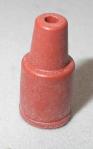
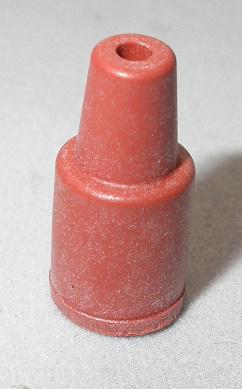
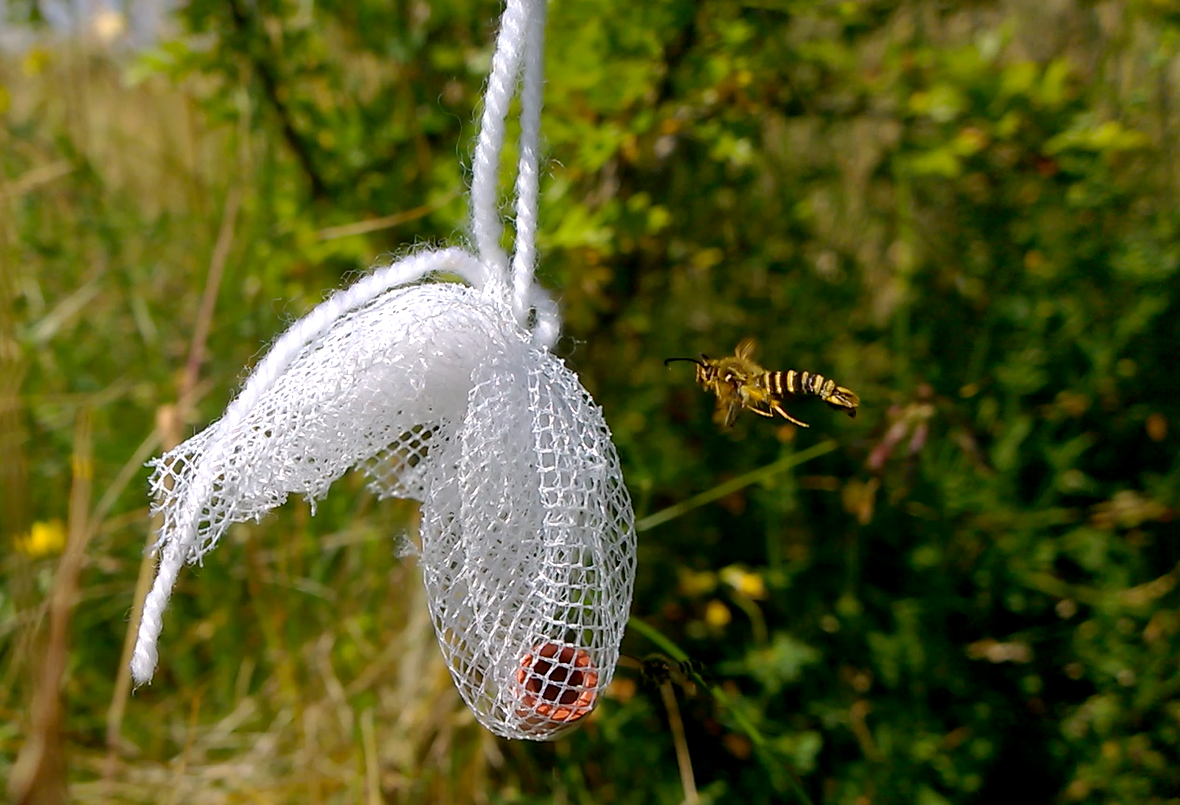
Bung containing Six-belted Clearwing pheromones
We were fortunate to have Richard Southwell, a well-respected local lepidopterist with us today, and he had brought pheromones along with him to try to lure Six-belted Clearwing moths. This black and yellow moth has long been known from the Portway Hill site, but is rarely if ever seen. To look at, the adult moths are similar in appearance to wasps and hoverflies and this is possibly one reason why they go unnoticed. As we approached the land owned by the Wildlife Trust, Richard went on ahead of the rest of the party and hung the netted pheromone bung close to a patch of Bird’s-foot Trefoil, the moth’s food plant, in the hope of attracting moths to the lure by the time we got to him. Alas, on this occasion nothing came. Not to be deterred we continued our walk, heading upwards along the recently opened route through the old quarry, which brought us out at the top of Bury Hill Park. As we walked, Bullfinch, Goldfinch and Speckled Wood butterflies were noted.

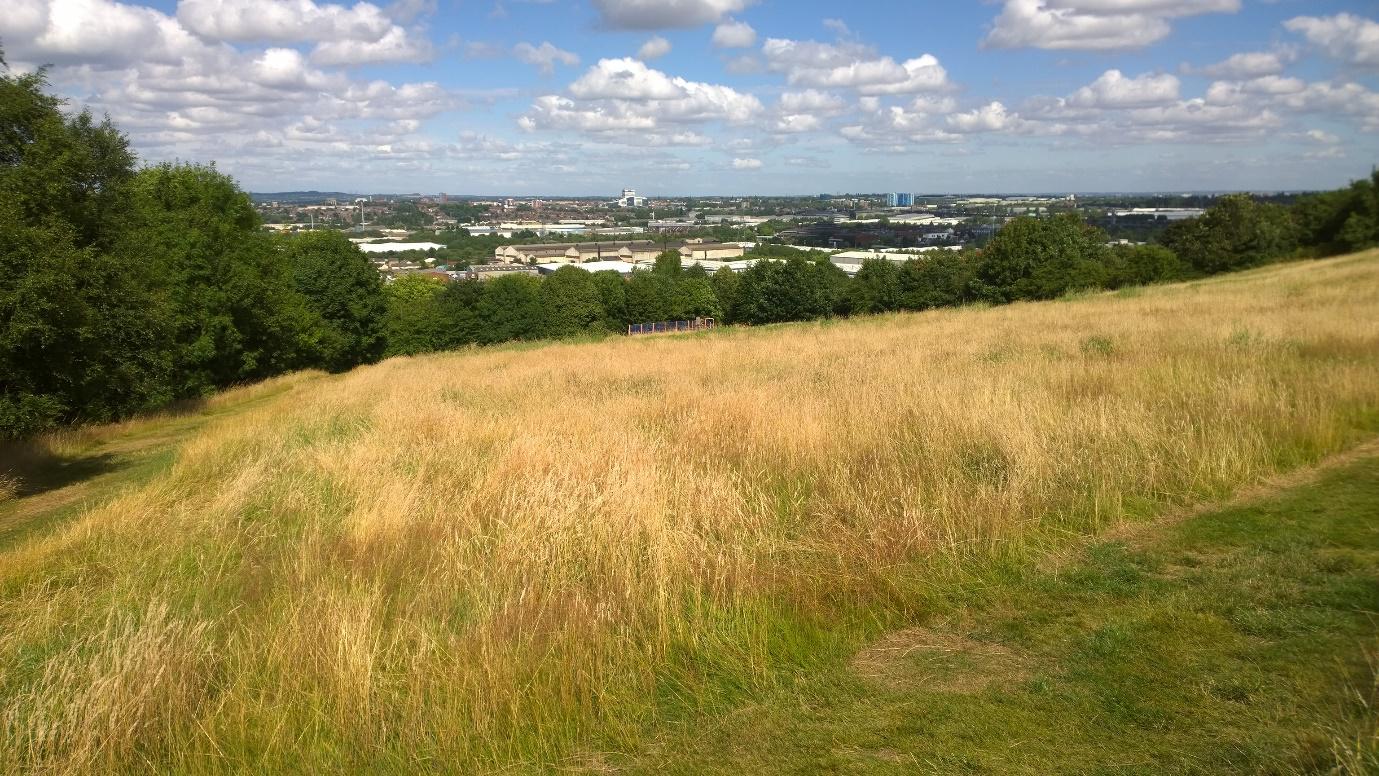
Bury Hill Park (image © Mike Poulton)
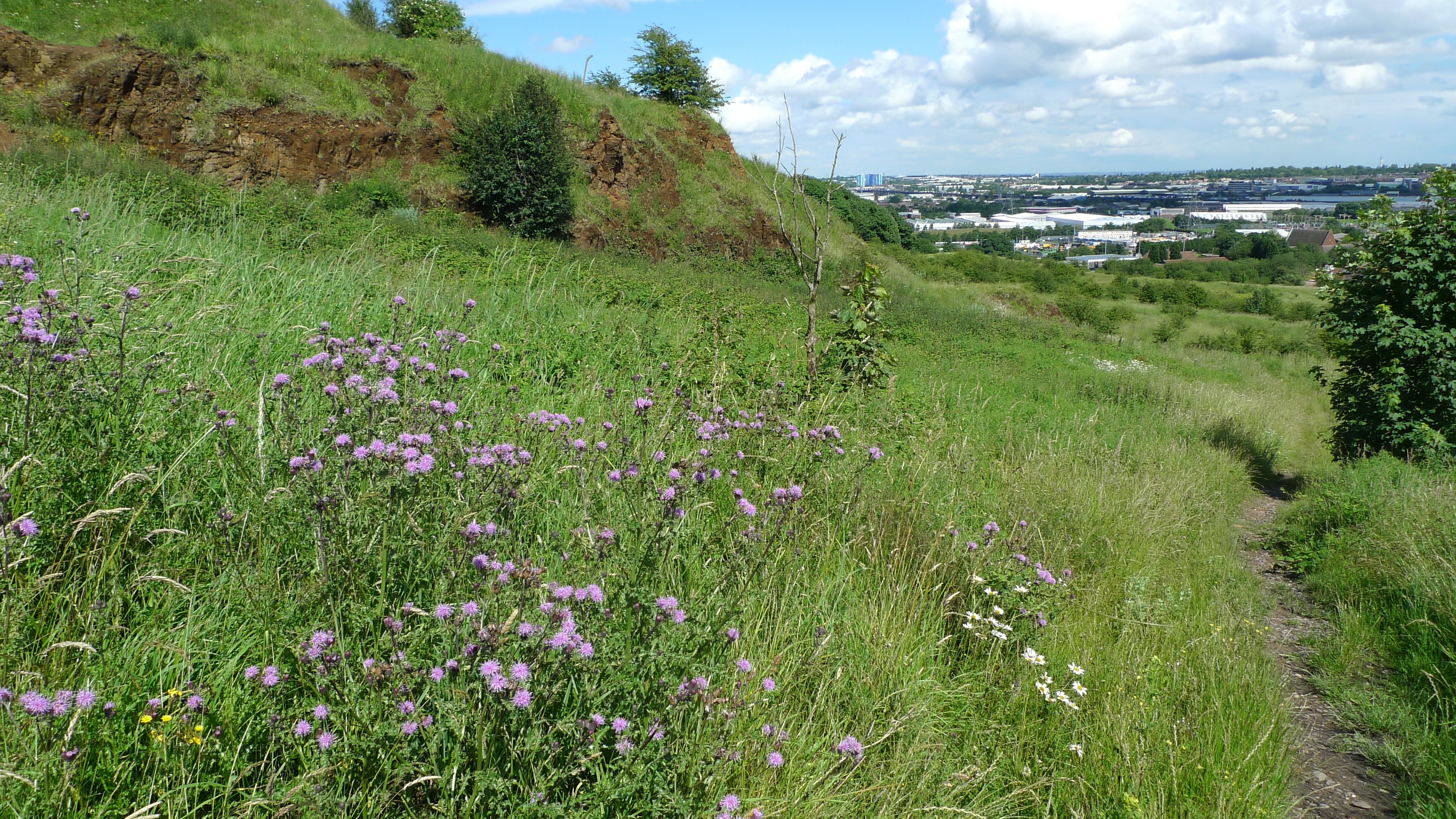
The views towards Birmingham and beyond from the top of the park are quite stunning, and in the unmown grassland, patches of Harebells were now flowering. Bury Hill Park grassland probably has the largest population of harebells in the whole of the Black Country and it was reassuring to see that the council had left the grass uncut giving the harebells the opportunity to flower and set seed.
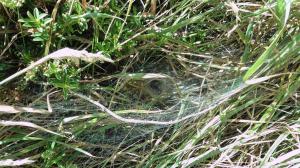
Labyrinth spider web (image © Mike Poulton)
Moving on from here we followed the track along the rear of the gardens in St Brades Close passing several webs of the unmistakeable Labyrinth spider Agelena labyrinthica. The webs of this spider are constructed in south-facing hedgerows from July to September and are sometimes so thickly woven that they appear white in colour. At the one end is a funnel shaped retreat, and further down the funnel there is a labyrinth of tunnels which gives this spider its name. Hidden deep down in the centre is the egg sac containing the developing young. The females remain with the young until they are ready to leave the web and in the event of the mother dying before the spiderlings are ready to leave the web, the young will eat their mother!
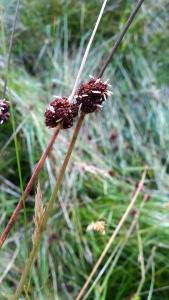
Case Bearer moth on Compact Rush (image © Mike Poulton)
Even in the driest of summers the ground at the rear of the gardens in St Brades Close is always wet. Rushes, sedges, Tufted Hair-grass, Great Willowherb and Reed Canary-grass thrive in these conditions, and as we passed our eyes were drawn to the numerous little whitish-coloured cases attached to almost every flower head on the Compact Rush. These were later identified as Case Bearer moth larvae Coleophora sp. This is a large group of similar-looking micro-moths whose larvae feed on flowers and seeds of various plants from within protective silken cases.
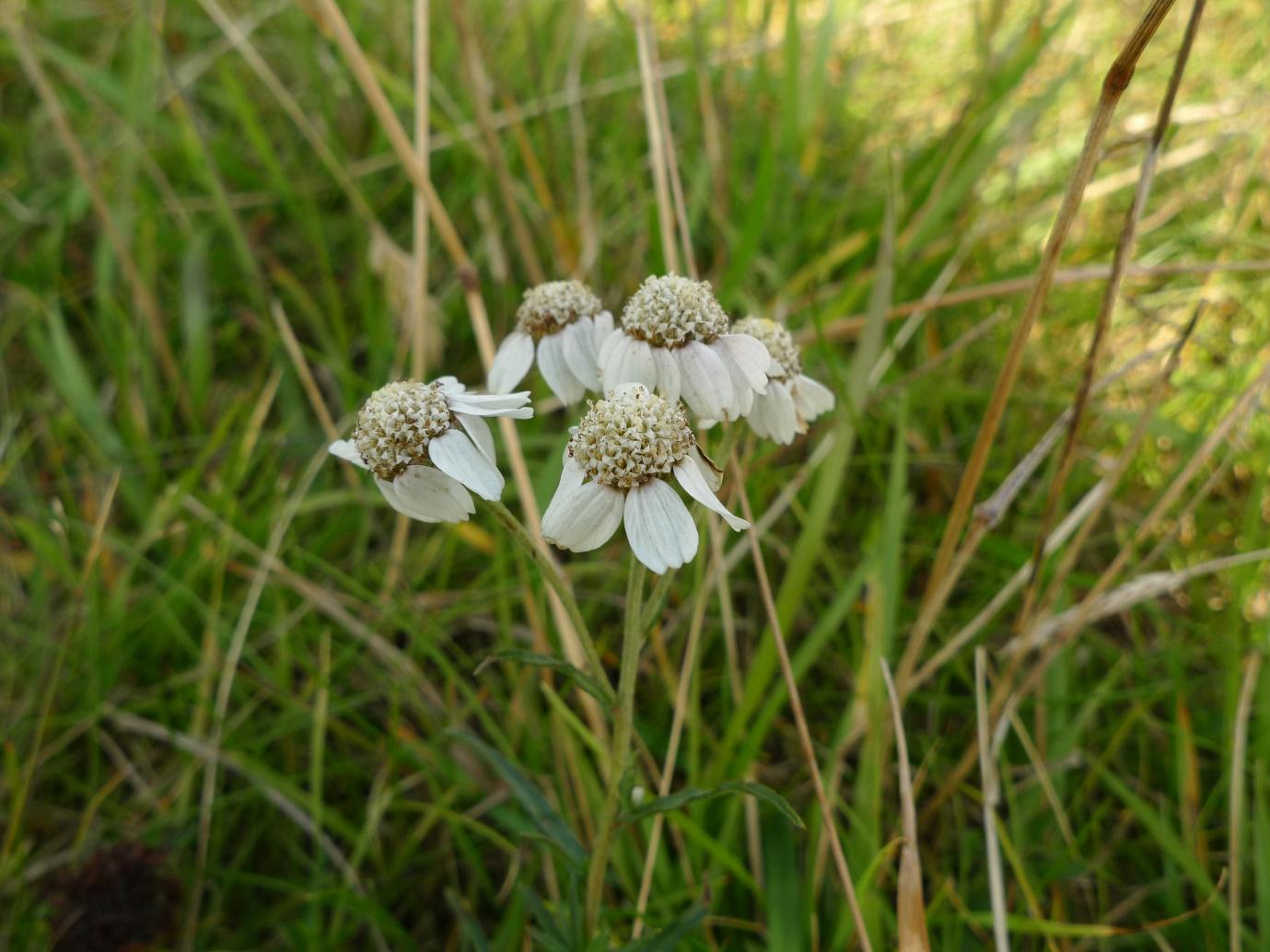
A little further on we arrived at the only known patch of Sneezewort on Portway Hill and nearby, a large Roesell’s Bush-cricket was spotted in the grassland.
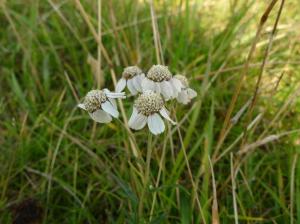
Sneezewort (image © Mike Poulton)
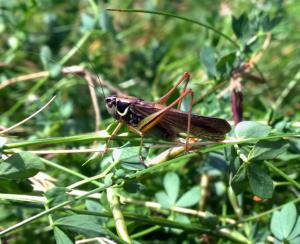
Roesel’s Bush Cricket (image © Mike Poulton)
Making our way back towards the start point a second attempt with the pheromones this time proved successful and within less than two minutes of positioning the bung near to a patch of Bird’s-foot Trefoil, several male Six-belted Clearwing moths had come to investigate. It was difficult to determine just how many individual moths there were as they fly so quickly but we estimated that there were at least 12. Flushed with success the pheromones were put down in two other spots where Common Bird’s-foot Trefoil was growing, and on each occasion clearwing moths appeared in no time at all. A great finale to another interesting walk.

Six-belted Clearwing (image © Andy Purcell)
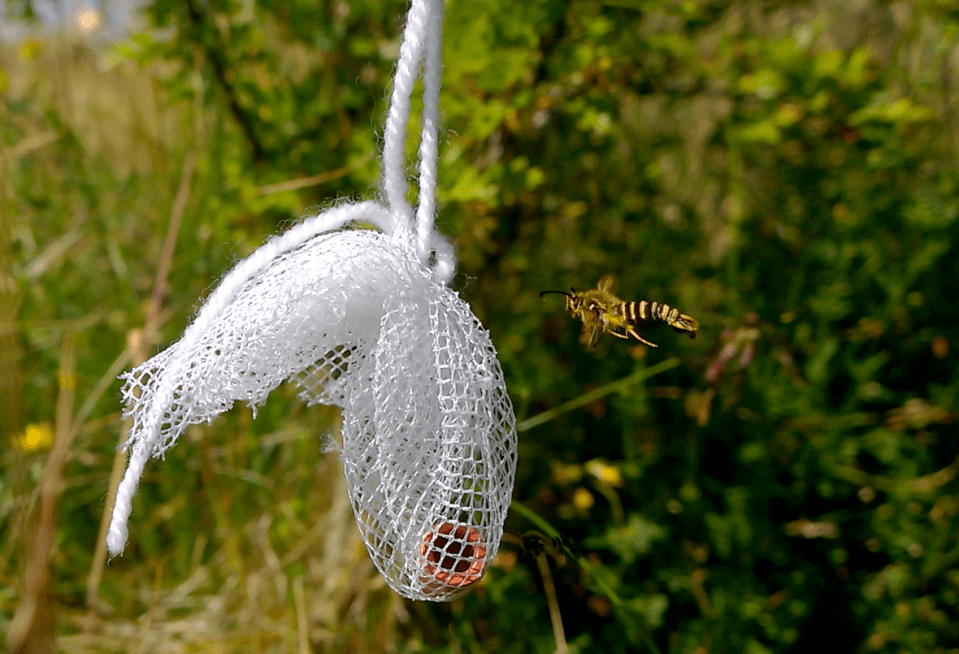
Six-belted Clearwing (image © Mike Poulton)
Mike Poulton, July 2017
Save












 Friends of Rowley Hills