Tag Archives: moths
Butterfly walk, Saturday 30th June
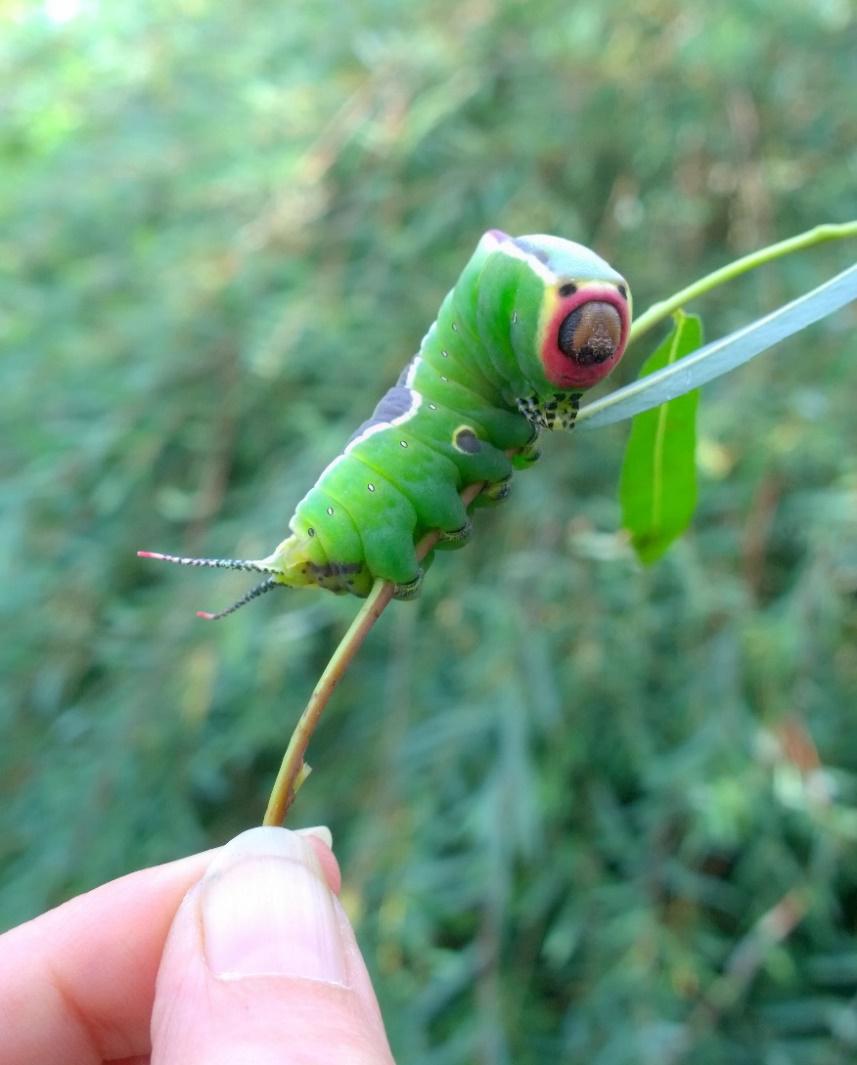
The Life-cycle of the Puss Moth in a Tividale garden
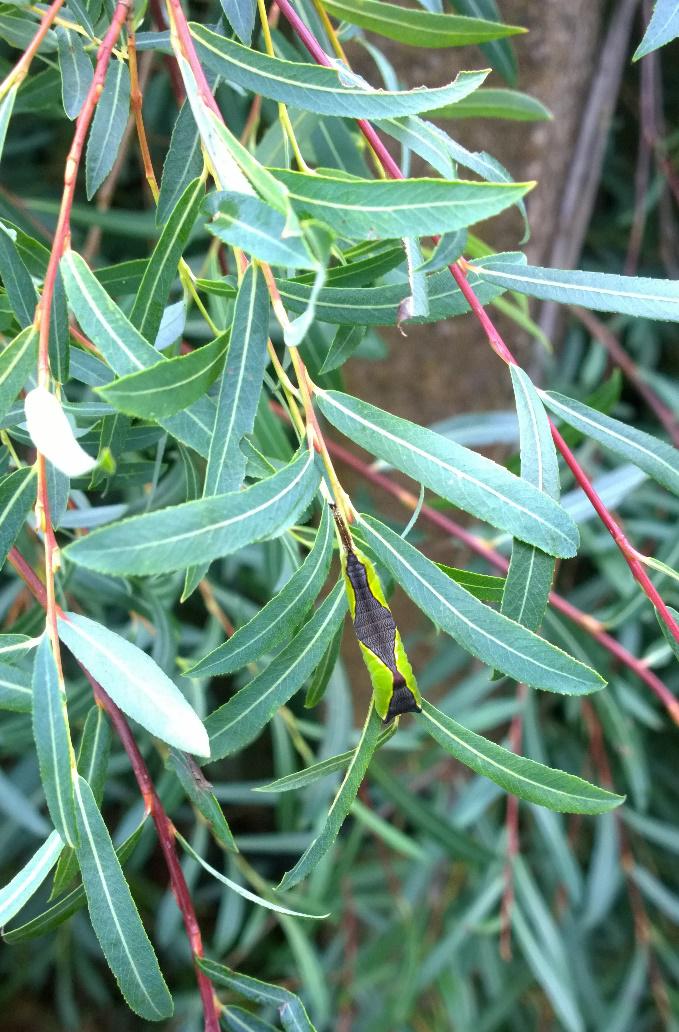
Do you have willow or poplar trees in your garden? If so, it’s worth searching for the fascinating caterpillars of the Puss Moth. They are frequent visitors to a local garden on the Rowley Hills where the residents have regularly studied their progress from eggs through to adult moths.
Once mating has taken place the female moths deposit small batches of brownish-coloured eggs on leaves of their food plant, in this case two small willow trees in their back garden.
Upon hatching the young caterpillars feed almost constantly for around four weeks and pass through several stages until fully grown.
In some years predation by birds, wasps and even Harlequin Ladybirds takes a heavy toll, but generally enough of them survive to maturity, ensuring there will be moths again the following year.

Adult caterpillar in disturbed posture, with raised head and pinkish flagellae extending from the twin tails
They spend the winter in a tough cocoon attached to tree trunks or wooden posts, then the newly-emerged moths seek out the food plant, and the cycle begins again.
2017 butterfly walks report
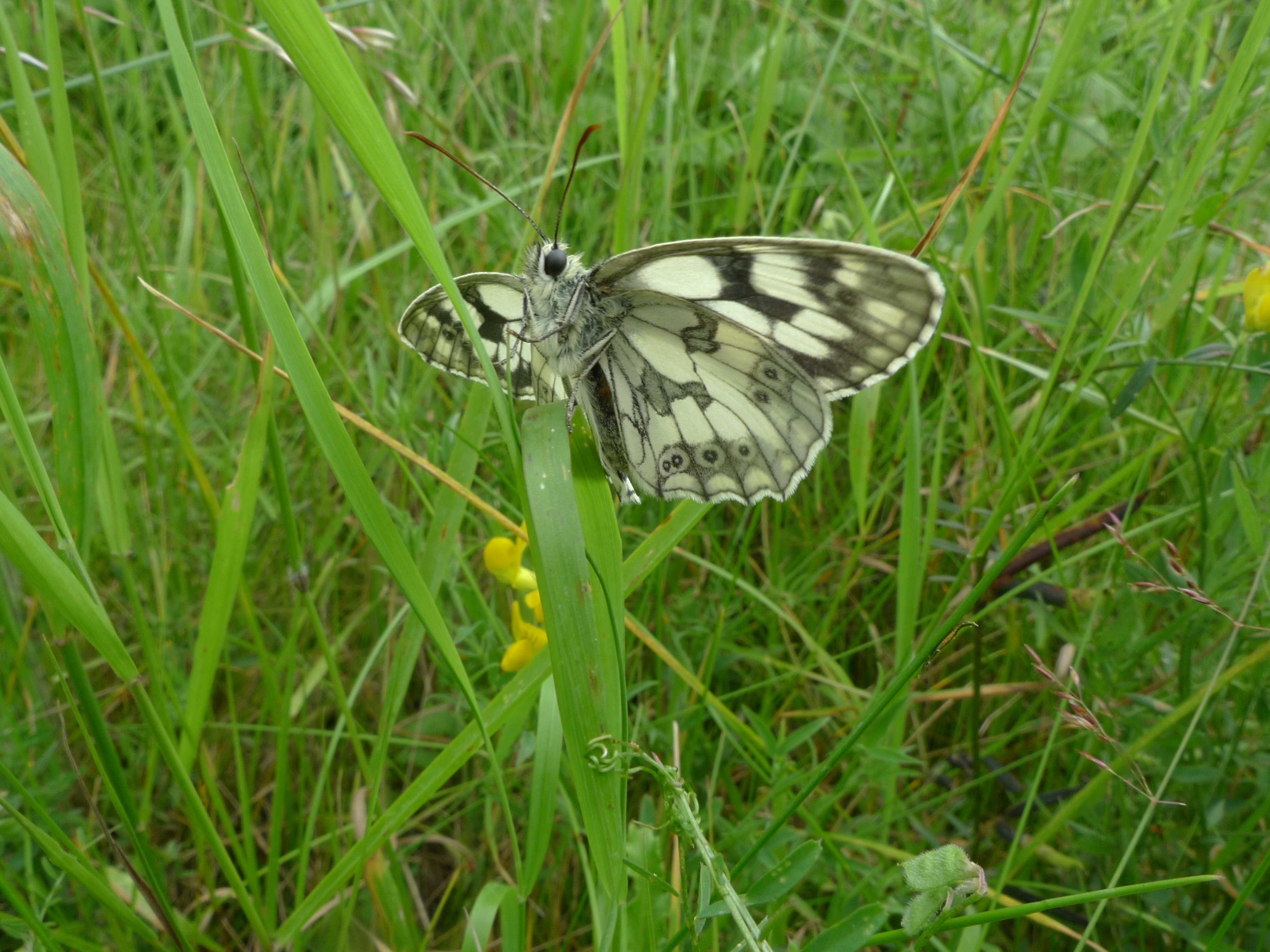
The numbers of Marbled White on Rowley Hills had still to peak but nonetheless we still managed a count of 17. In some years hundreds can be seen fluttering above and in between grass tufts searching out mates, or in the case of females, randomly scattering eggs on to blades of grass as they go, across the whole of the hillside. Other butterflies and day-flying moths seen on this first walk were Red Admiral, Small Tortoiseshell, Speckled Wood, Meadow Brown, Six-spot Burnet, Latticed Heath and Burnet Companion.
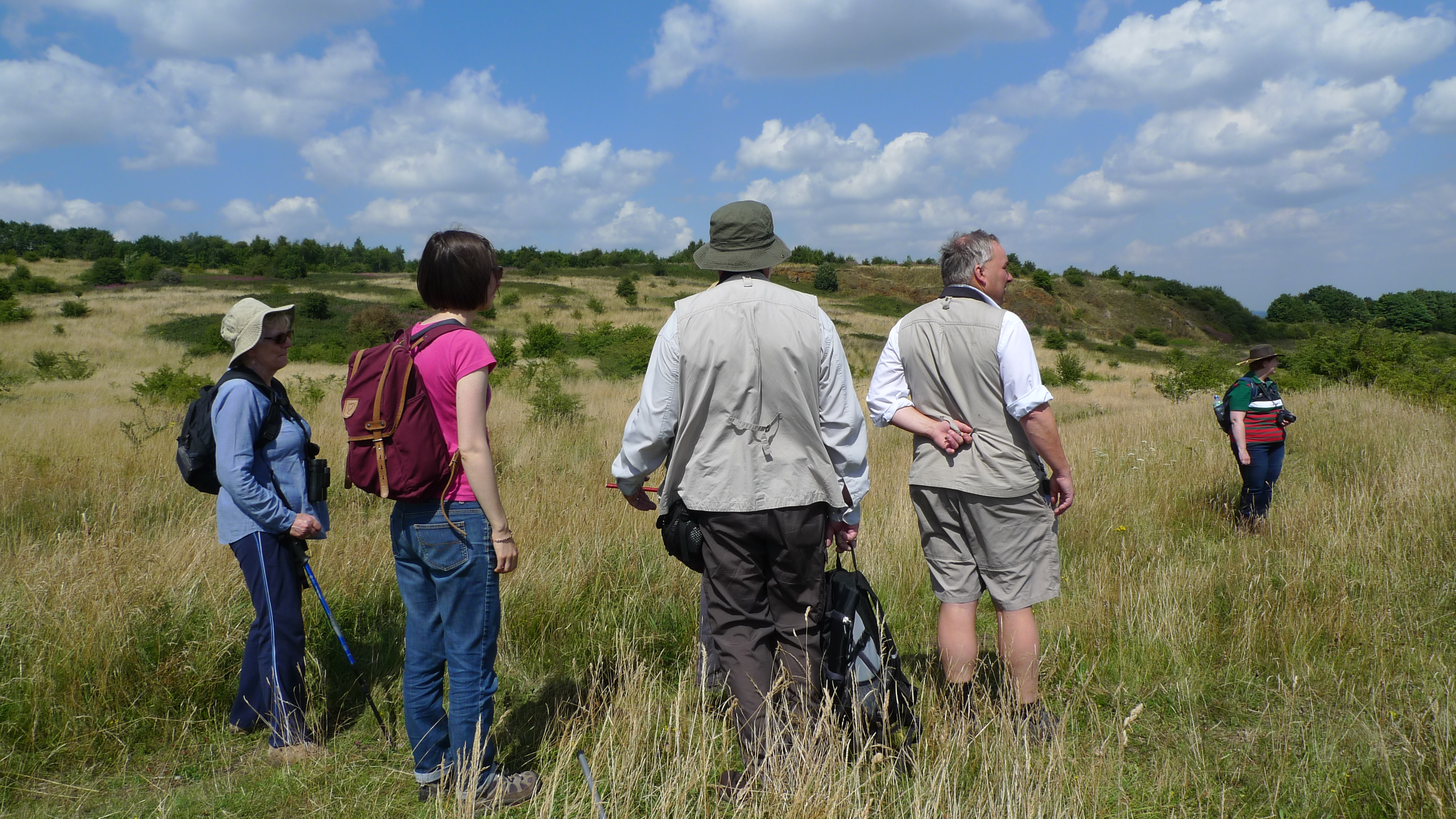
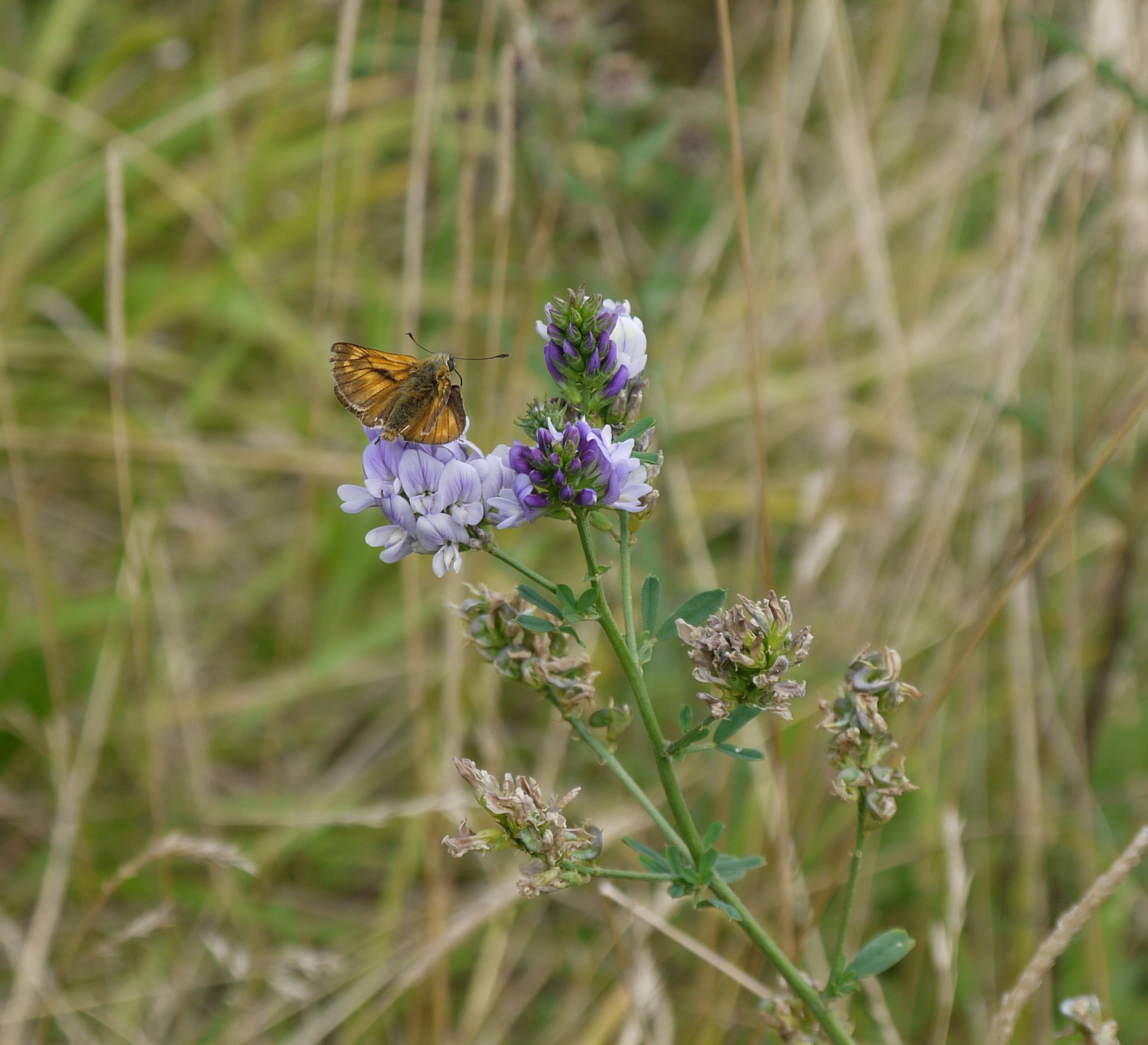
In contrasting weather conditions, our second butterfly walk on Saturday 15th July started off overcast and cool with a blustery wind. This did not deter 21 people from turning out and as the morning passed conditions improved considerably, although we never actually saw any sunshine. When butterflies shelter from the wind and rain they get well down into the vegetation making finding them difficult. However, it wasn’t long before one sharp-eyed group member spotted our first butterfly of the day, a Small Skipper. This small, orange-brown butterfly looks very much like the Essex Skipper. Both are found on Rowley Hills and a close inspection of the underside of the antennae is necessary to separate the two. Good photographs of both can be found in books and on the internet for those interested in seeing the differences. It wasn’t long before we spotted the first Marbled White of the day, soon followed by a Ringlet, Meadow Brown, Gatekeeper, and Shaded Broad-bar. The distinctive black spots on a red background of the Six-spot Burnet is a warning to would-be predators that they are distasteful and should be avoided. The closely related Narrow-bordered Five-spot Burnet has very similar markings and both were seen during the walk.
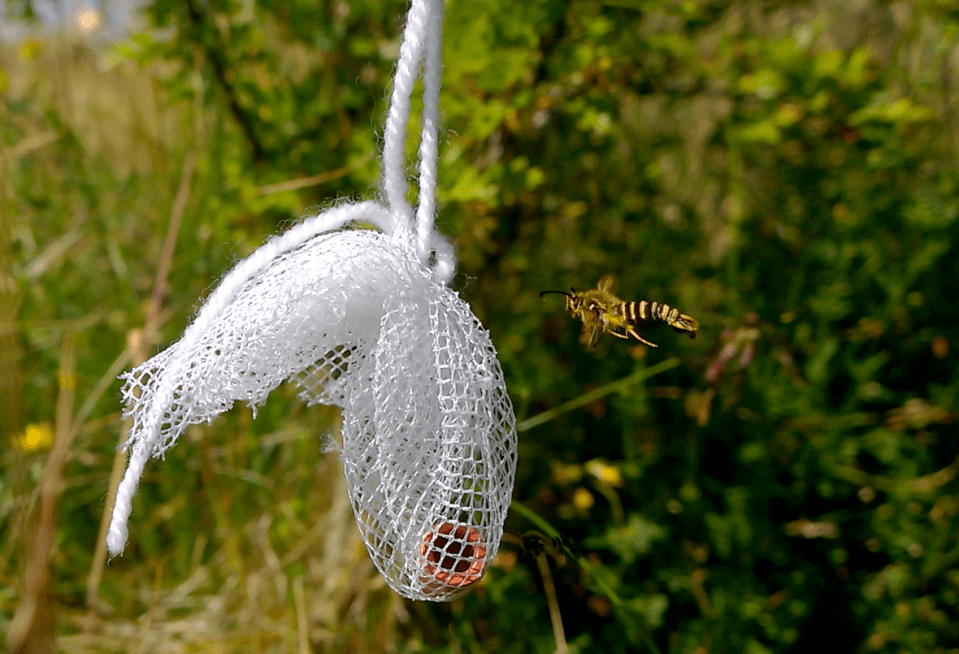
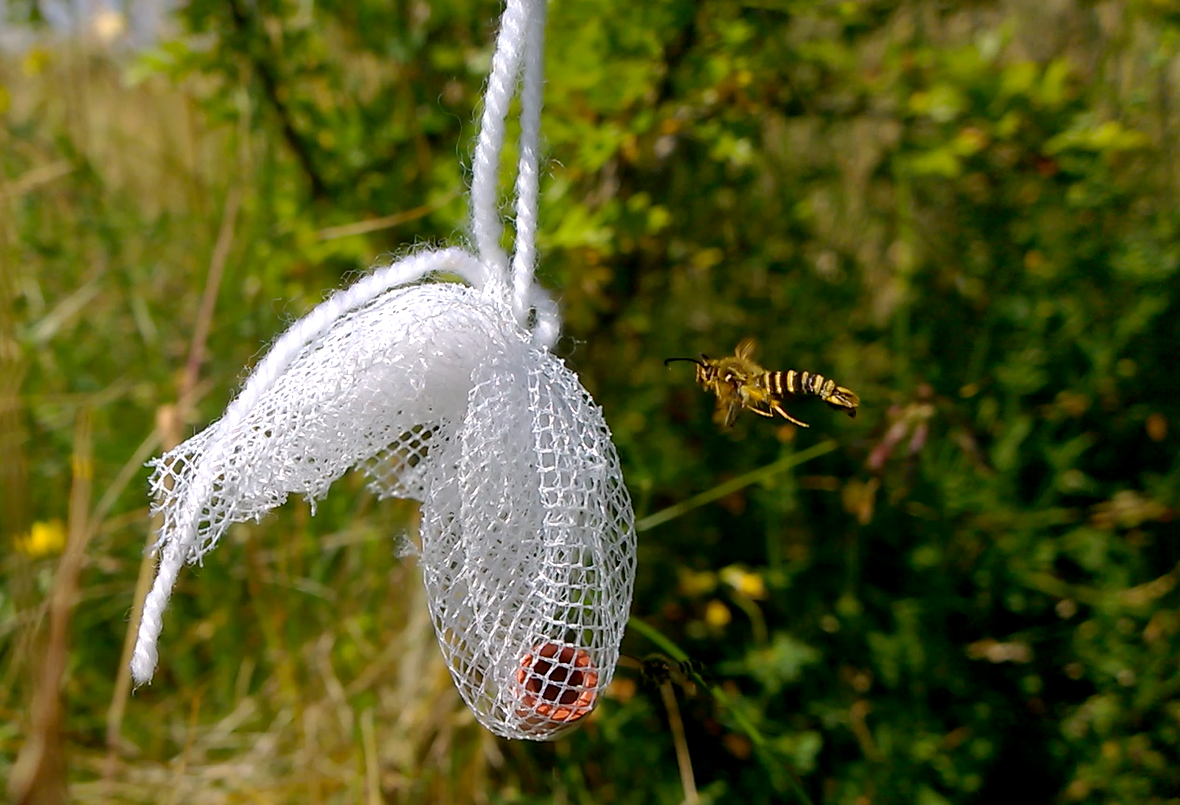
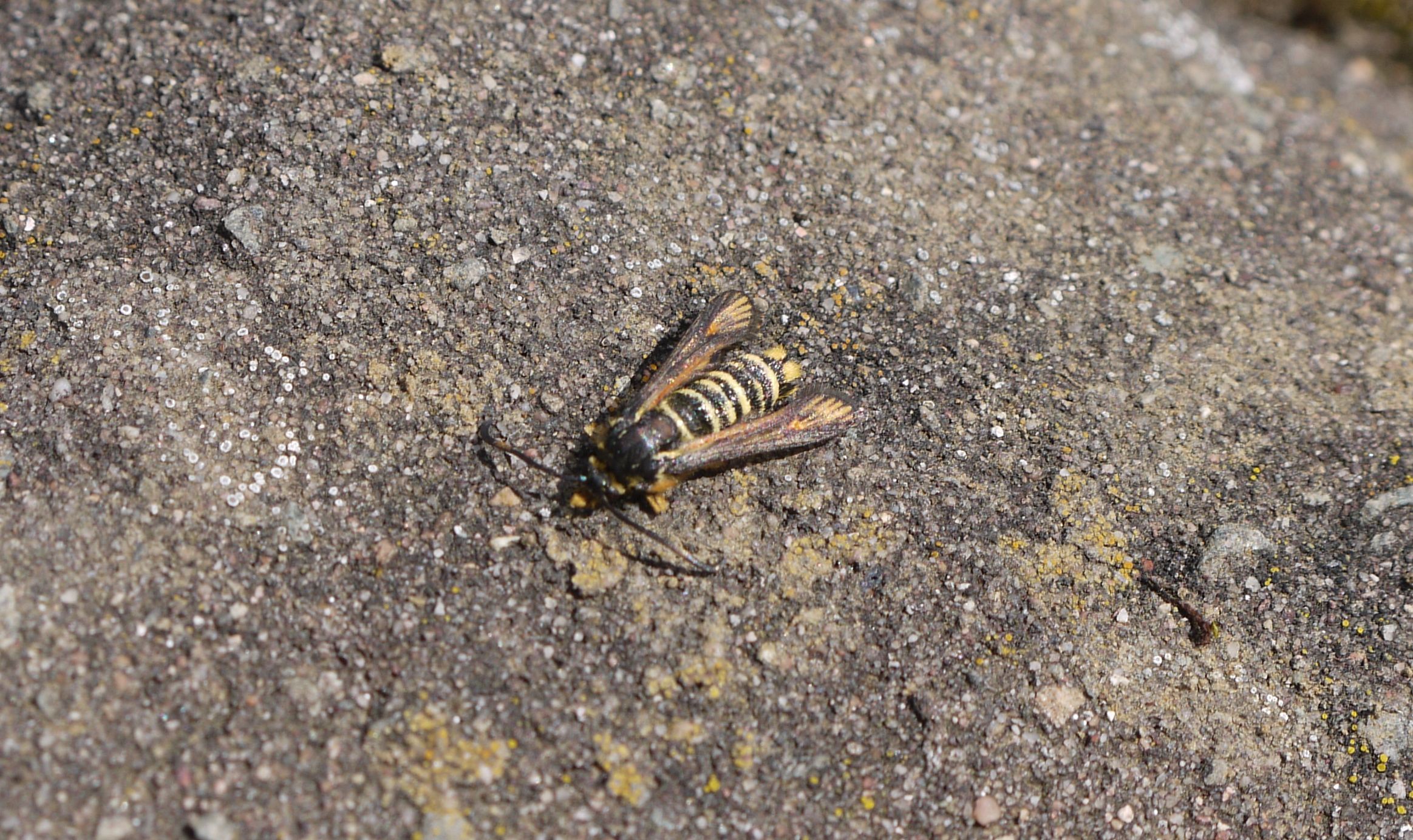
We were fortunate to have Richard Southwell, a well-respected local lepidopterist with us today, and he had brought pheromones along with him to try to lure Six-belted Clearwing moths. This black and yellow moth has long been known from the Portway Hill site, but is rarely if ever seen. To look at, the adult moths are similar in appearance to wasps and hoverflies and this is possibly one reason why they go unnoticed. As we approached the land owned by the Wildlife Trust, Richard went on ahead of the rest of the party and hung the netted pheromone bung close to a patch of Bird’s-foot Trefoil, the moth’s food plant, in the hope of attracting moths to the lure by the time we got to him. Alas, on this occasion nothing came. Not to be deterred we continued our walk, heading upwards along the recently opened route through the old quarry, which brought us out at the top of Bury Hill Park. As we walked, Bullfinch, Goldfinch and Speckled Wood butterflies were noted.
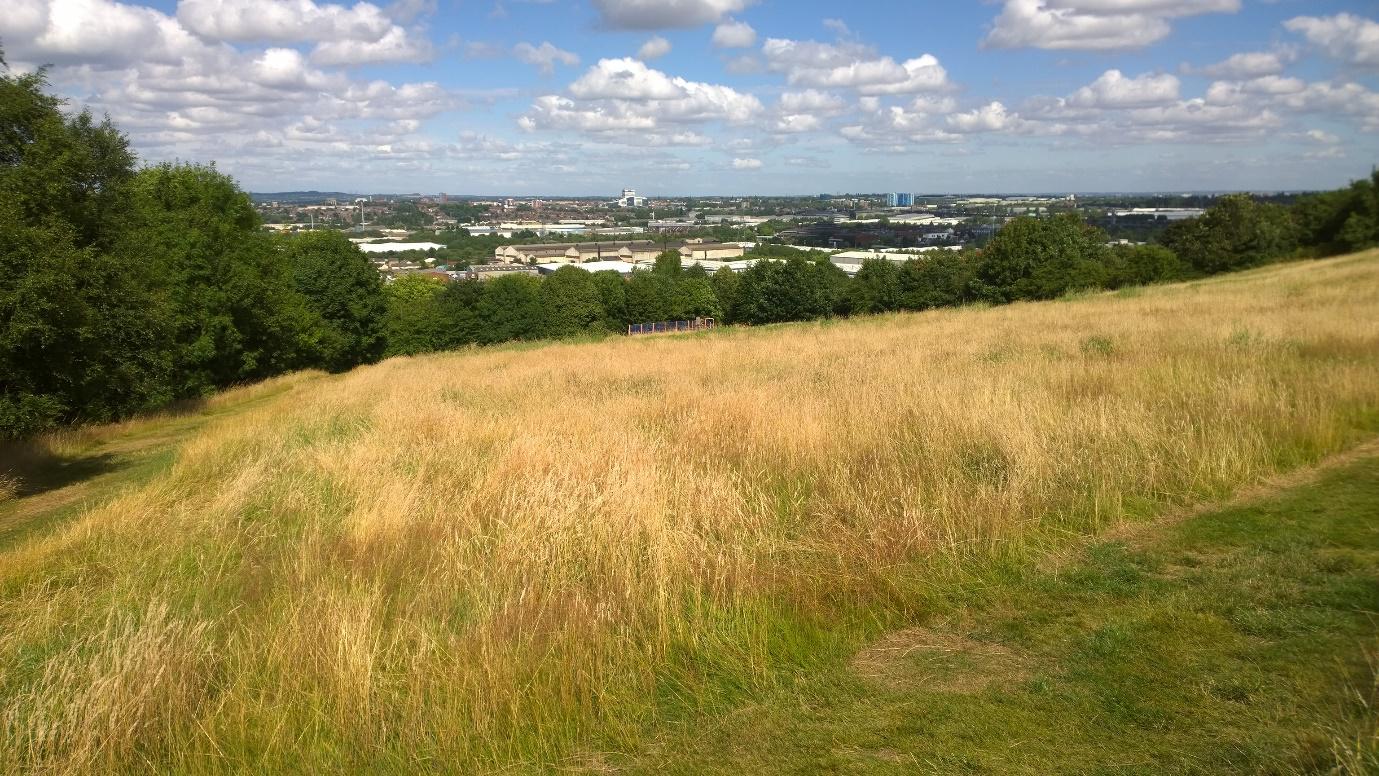
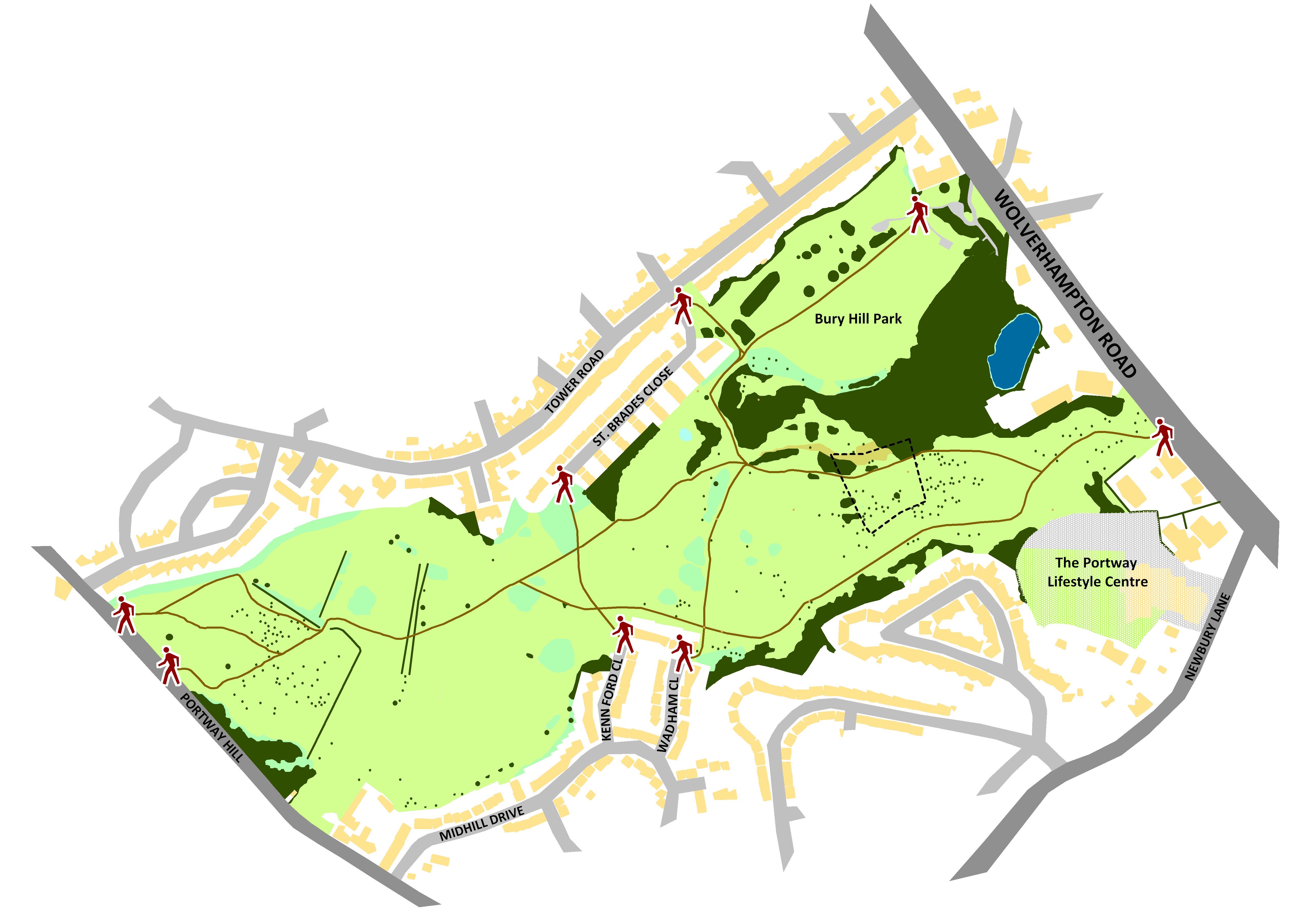
The views towards Birmingham and beyond from the top of the park are quite stunning, and in the unmown grassland, patches of Harebells were now flowering. Bury Hill Park grassland probably has the largest population of harebells in the whole of the Black Country and it was reassuring to see that the council had left the grass uncut giving the harebells the opportunity to flower and set seed.
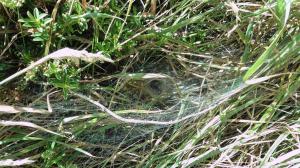
Moving on from here we followed the track along the rear of the gardens in St Brades Close passing several webs of the unmistakeable Labyrinth spider Agelena labyrinthica. The webs of this spider are constructed in south-facing hedgerows from July to September and are sometimes so thickly woven that they appear white in colour. At the one end is a funnel shaped retreat, and further down the funnel there is a labyrinth of tunnels which gives this spider its name. Hidden deep down in the centre is the egg sac containing the developing young. The females remain with the young until they are ready to leave the web and in the event of the mother dying before the spiderlings are ready to leave the web, the young will eat their mother!
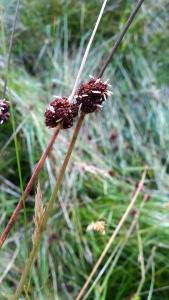
Even in the driest of summers the ground at the rear of the gardens in St Brades Close is always wet. Rushes, sedges, Tufted Hair-grass, Great Willowherb and Reed Canary-grass thrive in these conditions, and as we passed our eyes were drawn to the numerous little whitish-coloured cases attached to almost every flower head on the Compact Rush. These were later identified as Case Bearer moth larvae Coleophora sp. This is a large group of similar-looking micro-moths whose larvae feed on flowers and seeds of various plants from within protective silken cases.
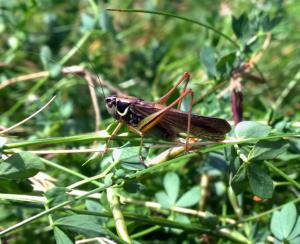
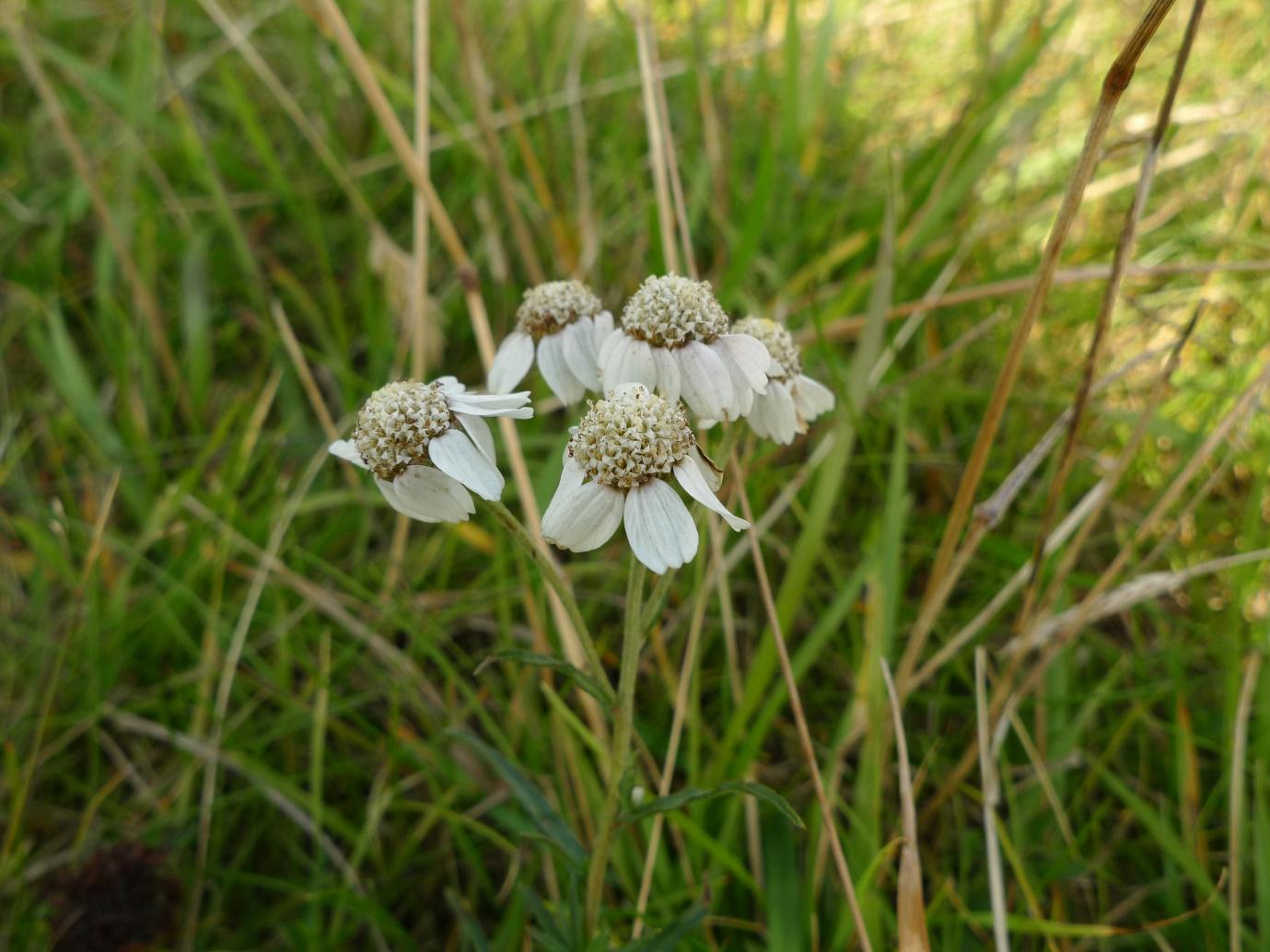
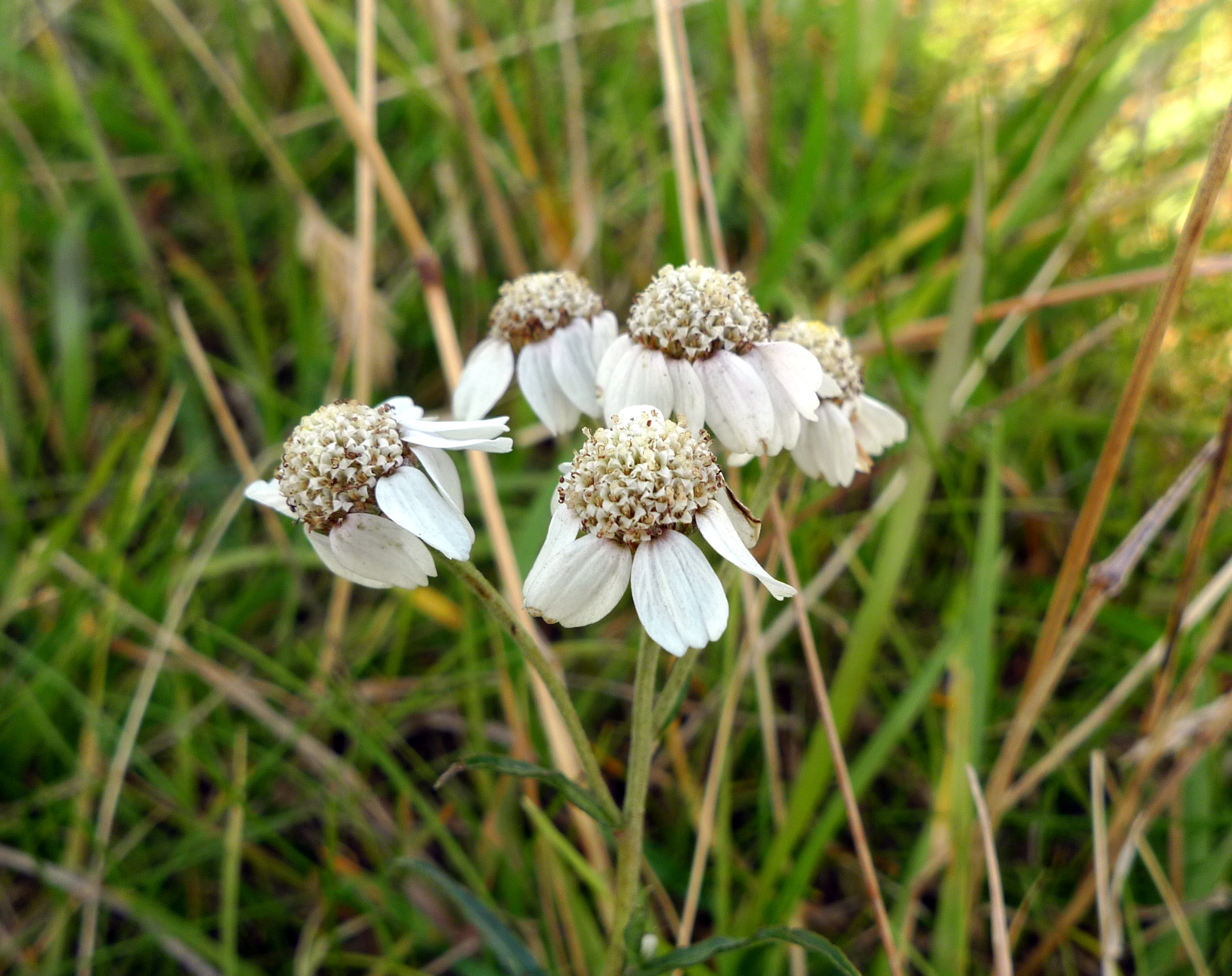
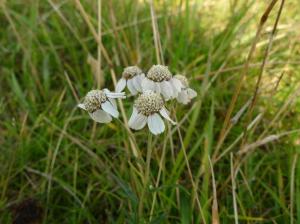
A little further on we arrived at the only known patch of Sneezewort on Portway Hill and nearby, a large Roesell’s Bush-cricket was spotted in the grassland.
Making our way back towards the start point a second attempt with the pheromones this time proved successful and within less than two minutes of positioning the bung near to a patch of Bird’s-foot Trefoil, several male Six-belted Clearwing moths had come to investigate. It was difficult to determine just how many individual moths there were as they fly so quickly but we estimated that there were at least 12. Flushed with success the pheromones were put down in two other spots where Common Bird’s-foot Trefoil was growing, and on each occasion clearwing moths appeared in no time at all. A great finale to another interesting walk.
Mike Poulton, July 2017
New summer events!
We’ve added a couple of fantastic walks to our events programme for this summer. Hope to see you there!
Portway Hill butterfly walk, Saturday 24th June 2017, 10:00am – 12:00pm. Join us and the Wildlife Trust for Birmingham & the Black Country for a guided walk around the Rowley Hills. The flowers on the hillside should just about be at their best by this time and if the day is sunny we will see many species of butterflies, including Marbled White; Portway Hill is one of this species’ hotspots in Birmingham and the Black Country. Meet on St Brades Close; ensure you are dressed appropriately for the forecast weather conditions, and wear sturdy footwear. No need to book, just turn up!
Butterflies, day-flying moths and wildflowers walk, Saturday 15th July 2017, 10:30am – 12:30pm. Join FORH Chair Mike Poulton and Richard Southwell from Butterfly Conservation West Midland Branch for a fascinating walk seeking out the butterflies, day-flying moths and wildflowers of the Rowley Hills. We will even be using pheromones to attract particular species! Walking boots are recommended and binoculars would also be useful. Meet on the roadside near the Total garage on Wolverhampton Road, just below the Brewers Fayre/KFC at the entrance to the Portway Hill site.
Look out for tigers!
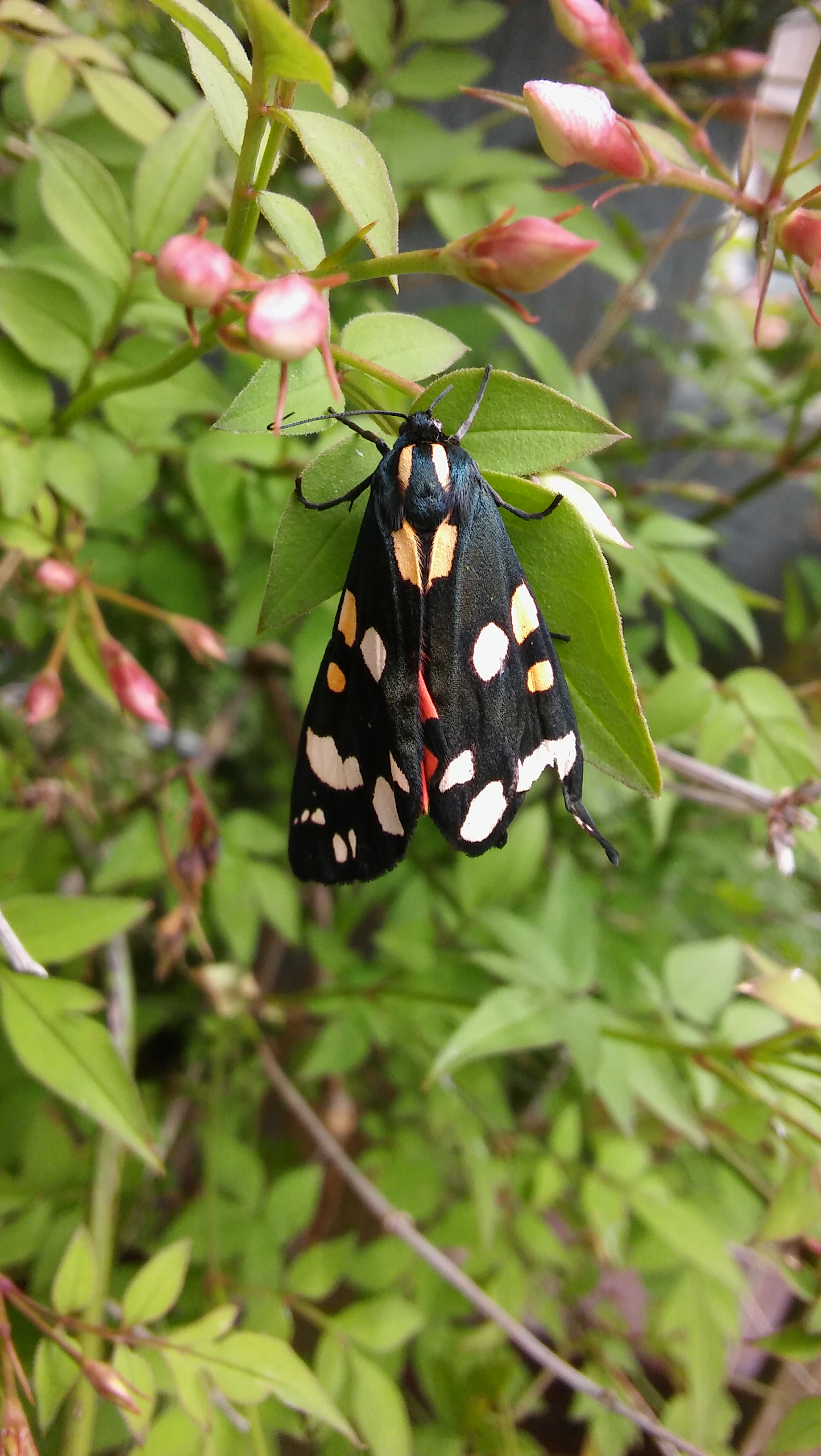
At this time of year, if you’re lucky, you might encounter tigers in your garden…..no not that kind of tiger! We’re talking about Scarlet Tiger (Callimorpha dominula) moths, one of our most spectacular moths. These colourful creatures are day-flying, their caterpillars feed on a range of herbaceous plants, and they are on the increase. The photo below was taken in a garden local to the Rowley Hills; the bright scarlet underwings are hidden beneath the forewings but sometimes you might find a Scarlet Tiger with its wings fully spread as shown in this photo. There is also a Scarlet Tiger Project in Stourbridge, formed by local residents who have successfully protected and enhanced habitat for Scarlet Tigers in their local area.
Do let us know if you’ve seen any Scarlet Tiger moths!
Forthcoming events
We’ve got loads of great events in the calendar over the next few months and we hope to see you at a few of them. The next one is a litter pick on Portway Hill tomorrow, and hopefully the weather forecast will hold for that! If you’re planning to come to any of our conservation volunteer days, please fill in your name and tick the dates you are coming to in this Doodle poll. There’s no limit to the number of people who can attend, it just gives us an idea of how many to expect!
- Conservation volunteer day, Portway Hill, Saturday 7th May 2016, 10:00am – 3:00pm. Join the Wildlife Trust for Birmingham & the Black Country for a fun day out meeting new people, helping the environment and learning new skills. We will be conducting a litter pick along Portway Hill. Meet at Kennford Close.
- Conservation volunteer day, Portway Hill, Saturday 14th May 2016, 10:00am – 3:00pm. Join the Wildlife Trust for Birmingham & the Black Country for a fun day out meeting new people, helping the environment and learning new skills. We will be improving access onsite by installing a crushed dolerite path through the Wildlife Trust-owned section of the site. Meet at St. Brades Close.
- Conservation volunteer day, Thursday 19th May 2016 – venue TBC.
- Geoconservation day, Portway Hill, Saturday 21st May 2016, 10:30. The Black Country Geological Society will be carrying out conservation work on Portway Hill to ensure the Rowley Rag rock exposures are not overgrown by brambles. Check their website for more information. No need to book.
- Butterflies and Flora on the Rowley Hills – guided walk, Saturday 4th June 2016, 10:30am. This is a joint meeting with Sandwell Valley Naturalists Club (Sandnats); Mike Bloxham and Mike Poulton will be leading a guided walk at a peak time in the season for wildflower displays and insect life on the Rowley Hills. Walking boots are recommended and binoculars would also be useful. Meet on the roadside near the Total garage on Wolverhampton Road, just below the Brewers Fayre/KFC at the entrance to the Portway Hill site (see map below).
- Butterfly walk, Portway Hill, Thursday 23rd June 2016, 11:00am – 1:00pm. In partnership with Butterfly Conservation, our Vice Chair Mike Poulton will be leading a guided walk around Portway Hill, following a route Mike wrote for the the soon-to-be published ‘Butterflies of the West Midlands‘ book. This is a peak time for butterfly activity and as long as the weather is good we should see significant numbers of different species. Walking boots are recommended and binoculars would also be useful. Meet on the roadside near the Total garage on Wolverhampton Road, just below the Brewers Fayre/KFC at the entrance to the Portway Hill site (see map below).
Wildlife round-up – October 2015
Although summer is over and autumn is now well and truly with us, there are still plenty of fascinating flora and fauna to be seen in the Rowley Hills. Here’s a round-up of recent sightings; don’t forget, if you’ve seen something interesting, let us know!
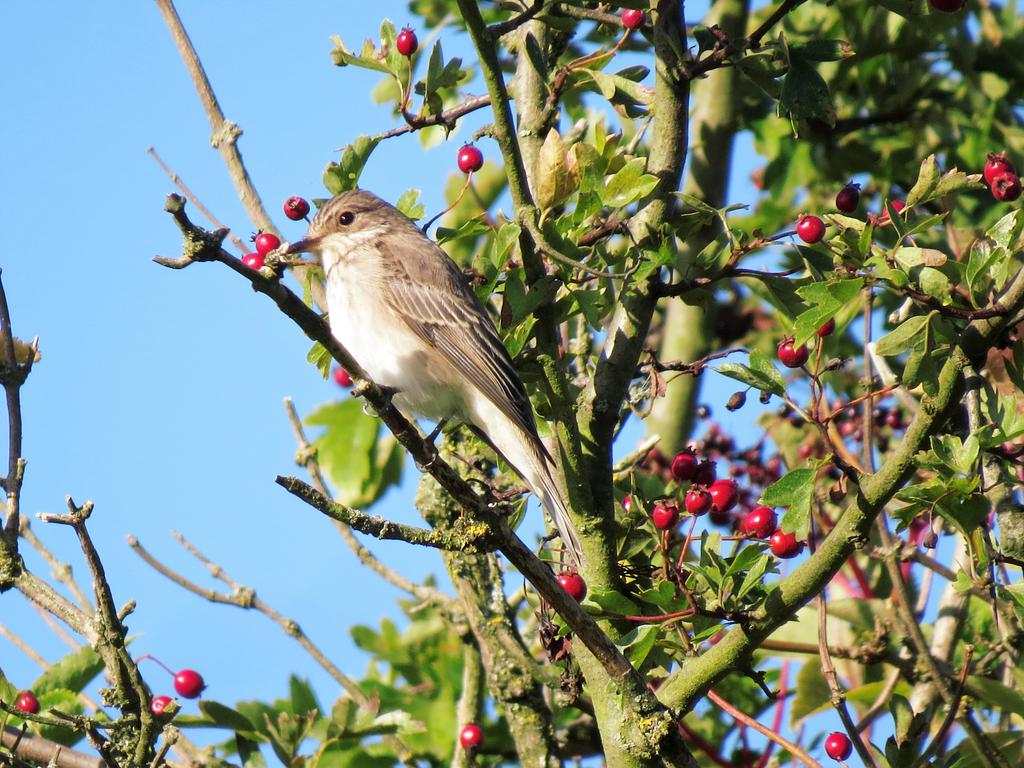
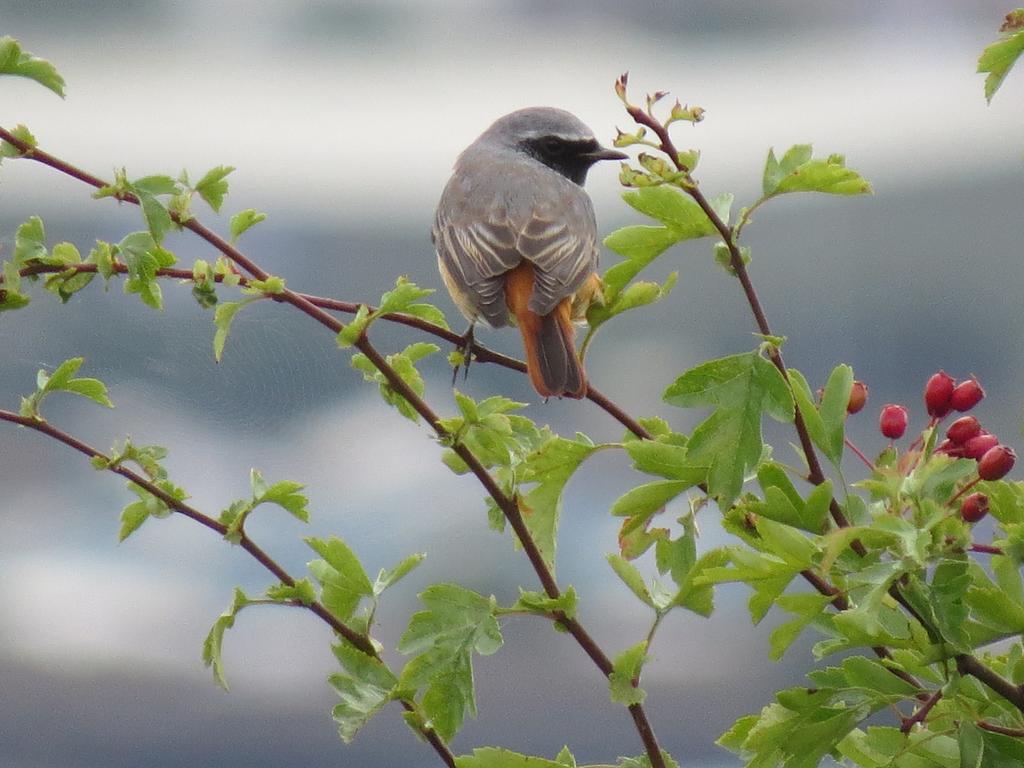
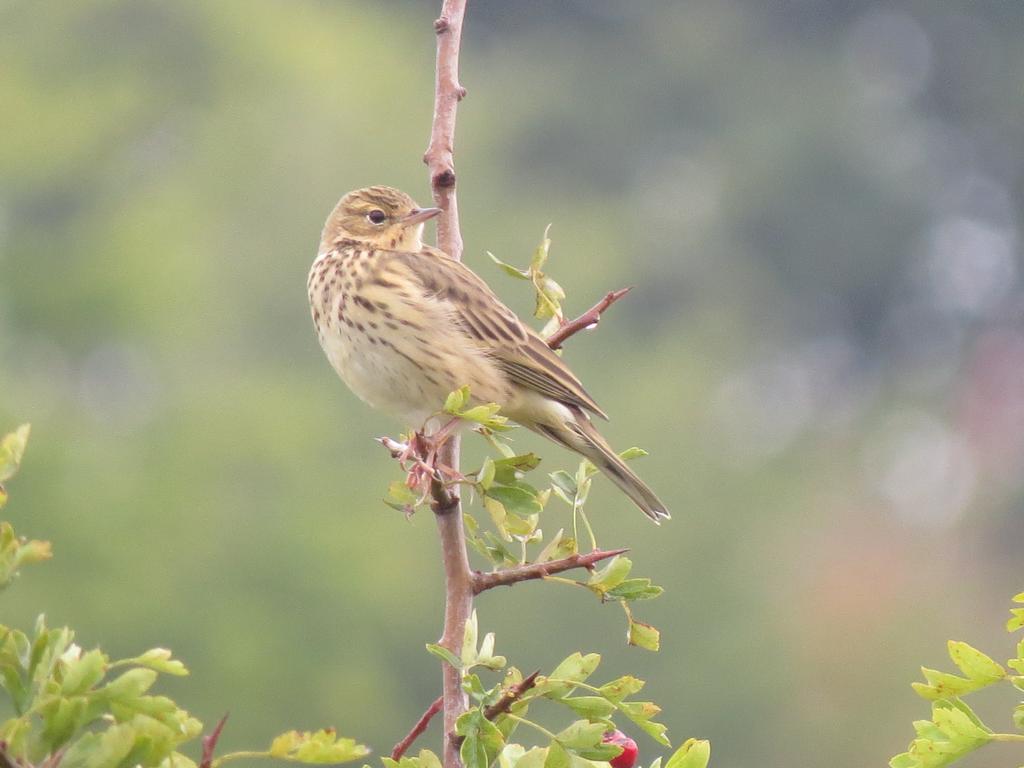
Bird migration is continuing apace, and taking on an autumnal flavour, with the first Redwings of the season being spotted. This member of the thrush family breeds in northern Europe and migrates south in autumn, escaping the cold weather to spend the winter in the UK and other central and southern European countries. Other migrating species seen recently include Meadow and Tree Pipits, White and Yellow Wagtails, House Martin, Chaffinch, Siskin, Redpoll, Swallow, Spotted Flycatcher, Chiffchaff, Golden Plover and Cormorant. Many thanks as always to Ian Whitehouse for keeping us up to date with his Rowley Hills sightings!

Early morning on the Rowley Hills, a great time for vismigging (observing visible migration of birds) (image © Ian Whitehouse).
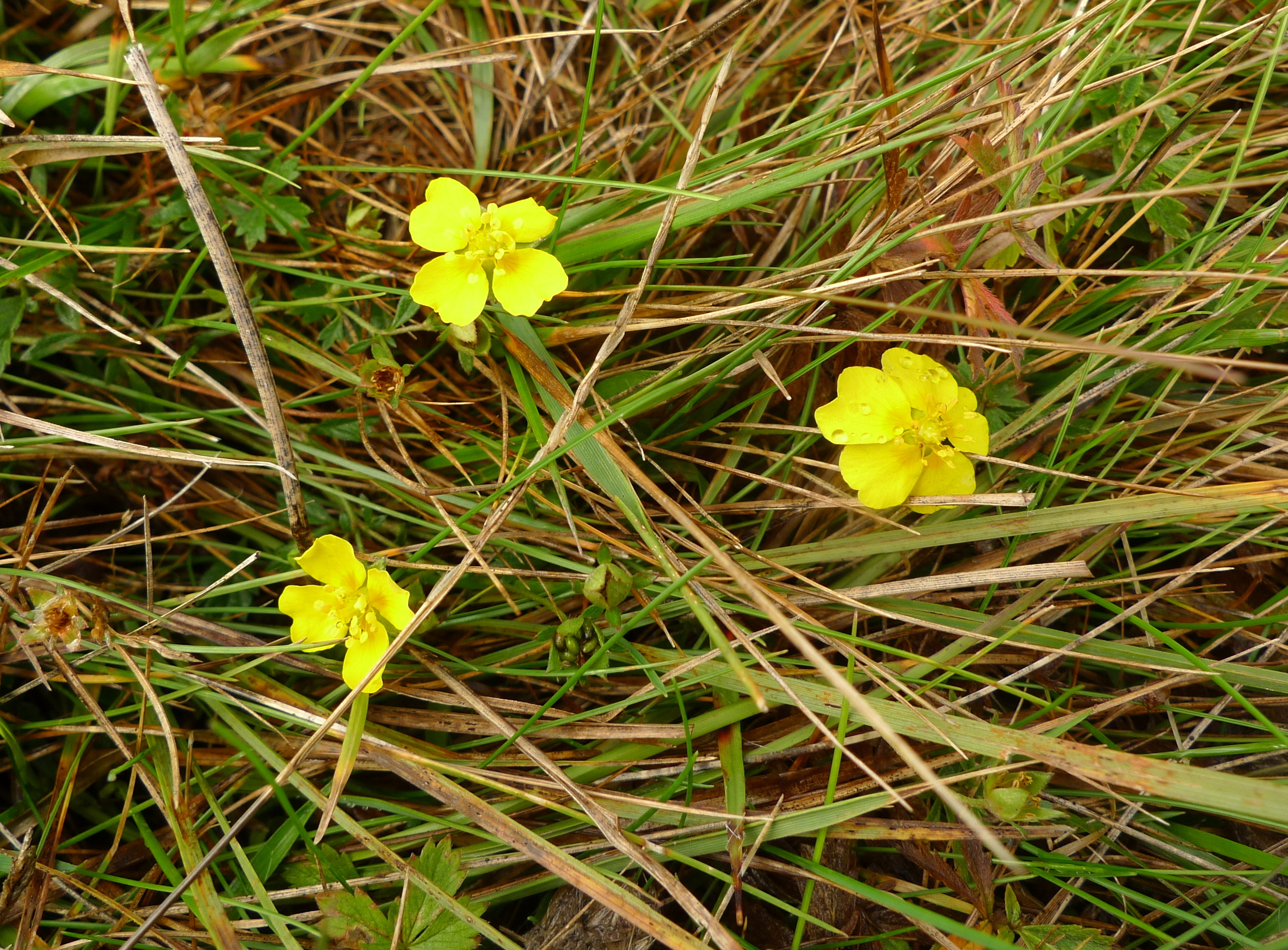
We’ve had more good news following Sandwell Council’s decision to delay cutting the grass on Bury Hill in response to our request. Not only has this allowed the Harebells there to finish flowering – enabling us to collect seed from them to sow elsewhere in the Rowley Hills – another scarce wildflower in Birmingham and the Black Country has been discovered in the same area which would probably never have come to light had the grass been cut as normal. The flower is Trailing Tormentil (Potentilla anglica); it is very difficult to identify as it hybridises with two other members of the Tormentil family, Creeping Cinquefoil (P. reptans) and Common Tormentil (P. erecta). The two hybrids and Trailing Tormentil all look very similar, having flowers with both 4 and 5 petals; however 2 experts have verified that it is Trailing Tormentil. The diagnostic feature confirming this is fully fertile flowers – hybrids are not fertile.
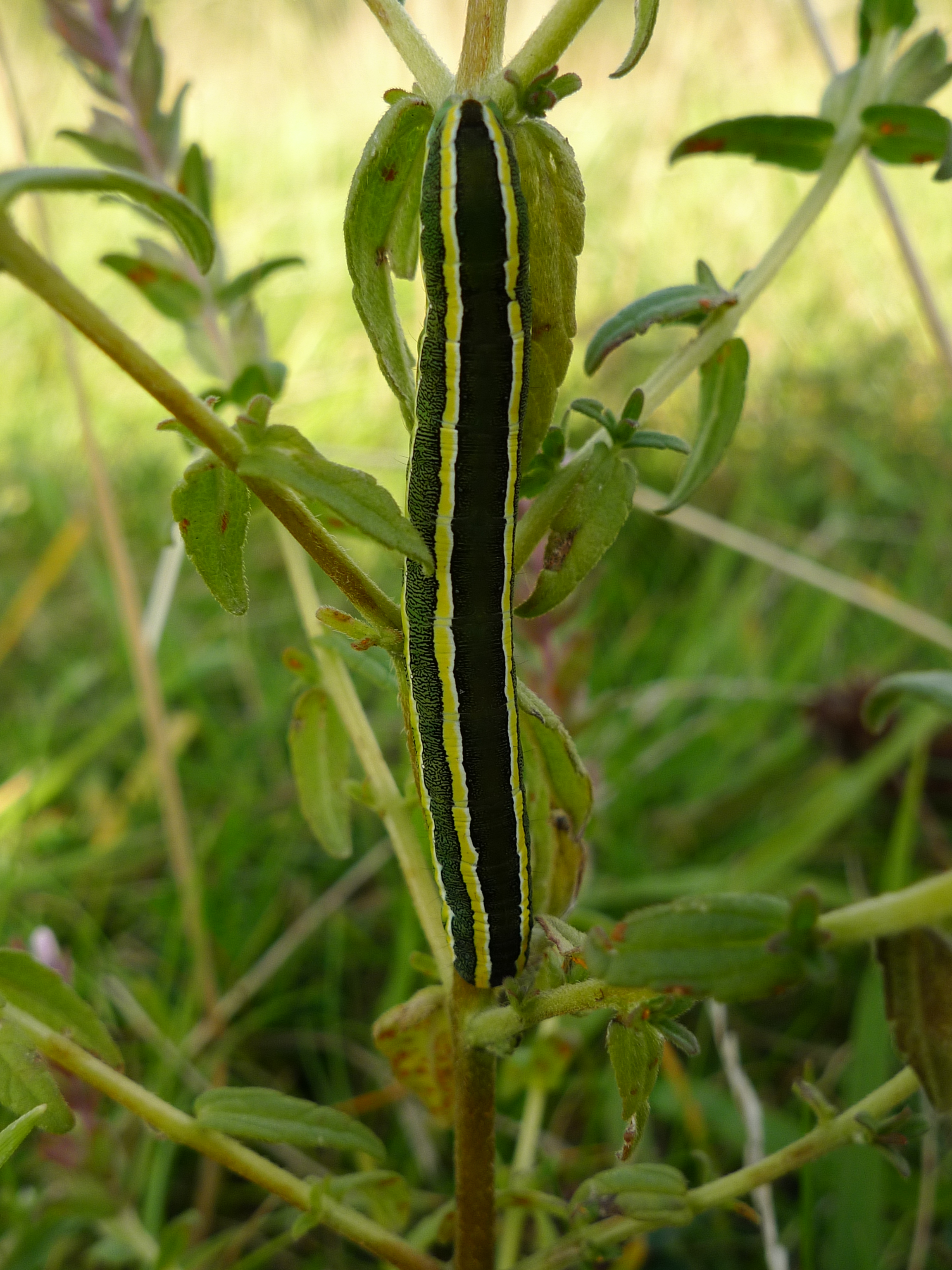
Elsewhere on the hills Mike Poulton photographed a Broom Moth caterpillar feeding on Red Bartsia, and another new botanical record for the Wildlife Trust’s Portway Hill site was a large patch of Sneezewort, so named because its pungent smell supposedly causes sneezing.
Mike and Doug also found an enormous spider whilst working on the Wildlife Trust’s site, which turned out to be a Four Spotted Orb Weaver. This spider holds the record for the heaviest spider in Britain!
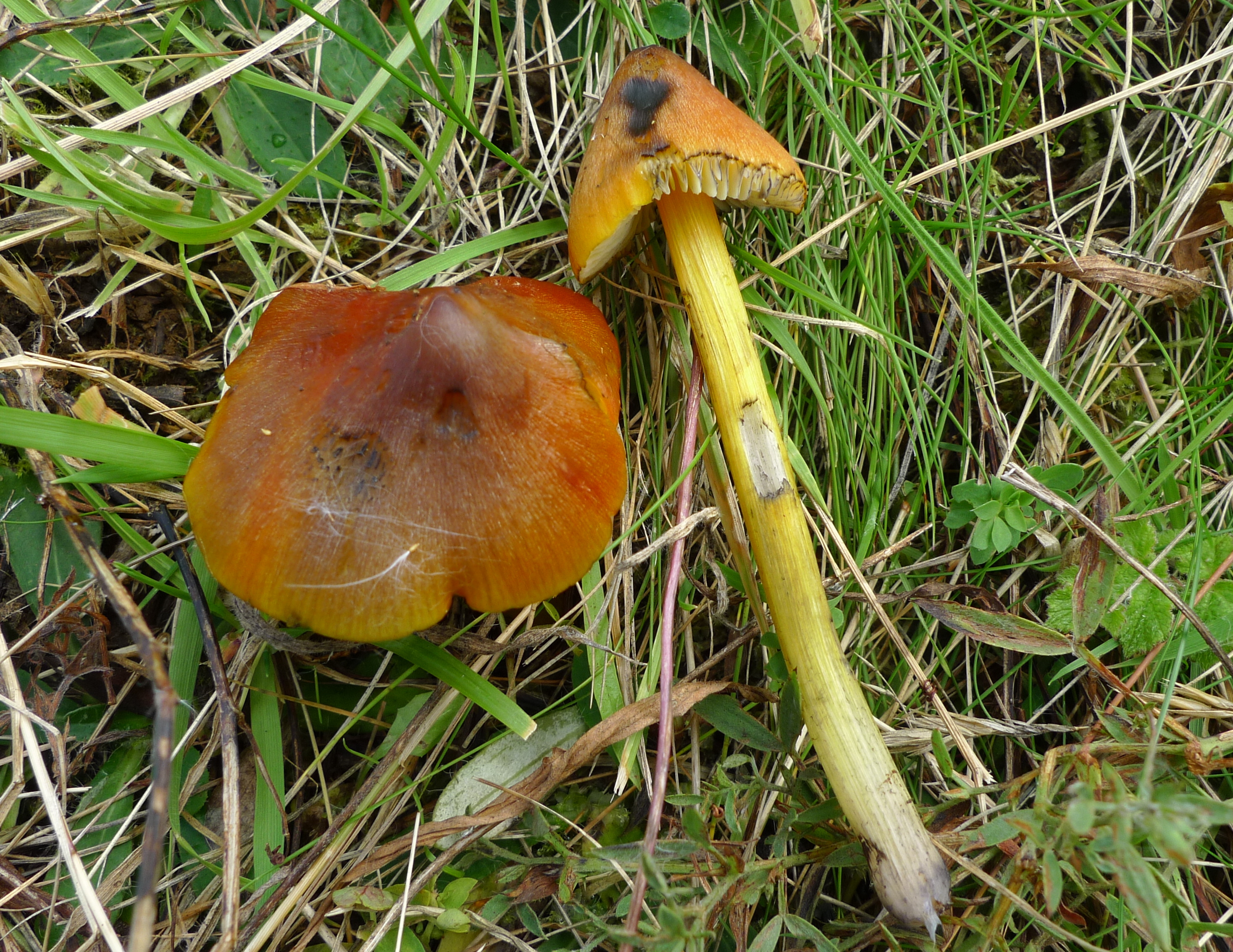
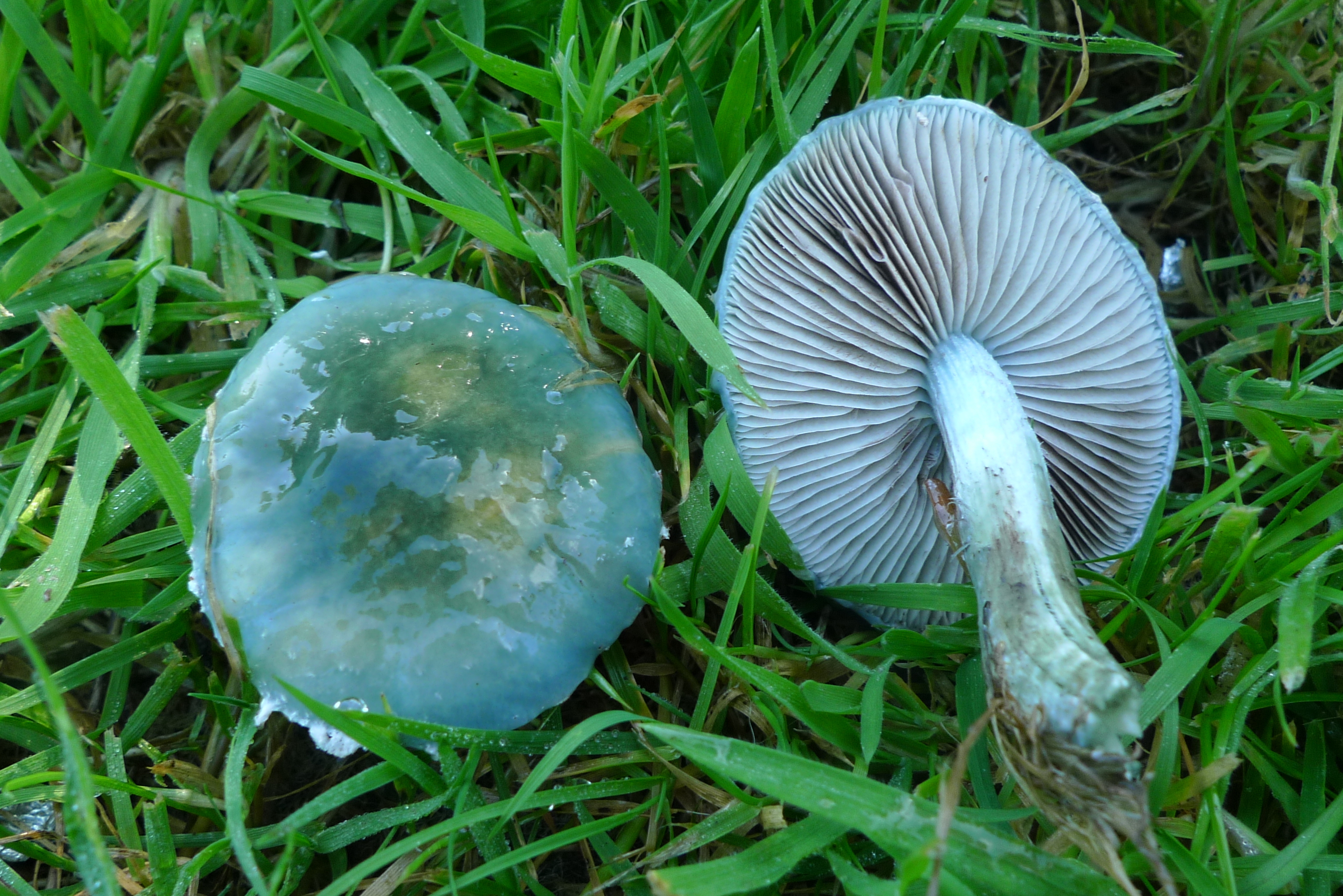
It’s turning out to be a great fungi season too. These two species were photographed last week; Blackening Waxcap was near the Wildlife Trust’s Portway Hill site and Verdigris Agaric was on Massey’s Bank.
Recent wildlife sightings
We’ve had some great wildlife sightings in and around the Rowley Hills recently! If you’ve spotted anything interesting, please do let us know.
At this time of year, the Hills host a continuous flow of migrating birds, which stop off briefly to rest and refuel before continuing their journey south. Recent sightings include Tree Pipit, Redstart, Linnet, Grey, Yellow and Pied Wagtails, Siskin, House Martin, Garden Warbler, Whitethroat, Lesser Whitethroat, Swift, Spotted Flycatcher, Sedge Warbler, Blackcap, Swallow, Willow Warbler, Mistle Thrush, Raven, Peregrine, Kestrel, Buzzard and Sparrowhawk. Many thanks to Ian Whitehouse who regularly tweets his Rowley Hills sightings and photos!
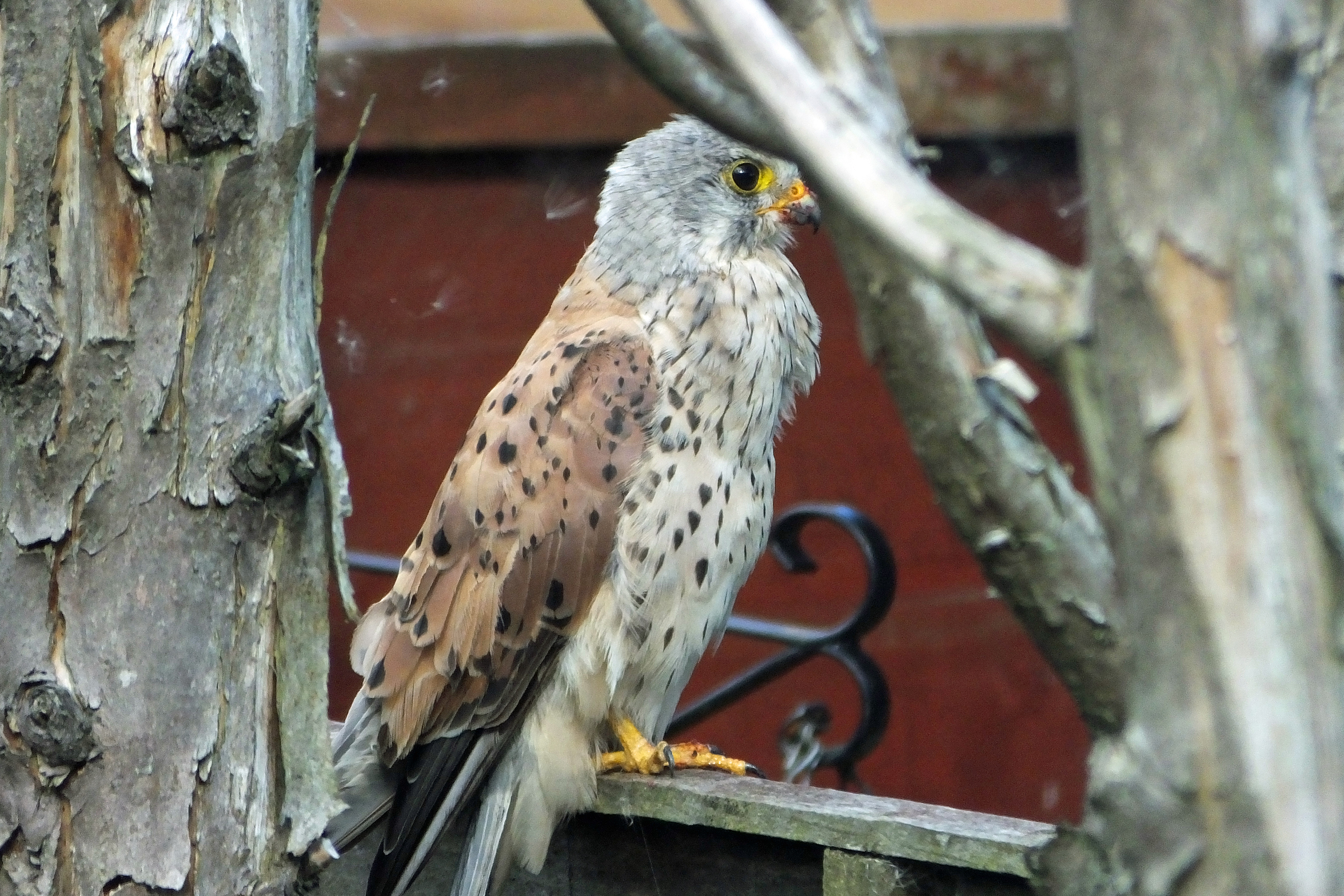
Local resident Andrew Cook also sent us these brilliants photos of a male Kestrel sitting on his garden fence. The Rowley Hills are a great spot for Kestrels as the grassland provides the perfect habitat for voles and mice, which are the Kestrel’s preferred prey. It looks as though this Kestrel may be resting after having recently eaten, as there is a small amount of blood on his beak and talons.
Another nice local record came from Lukas Large, who recorded this video of a Humming-bird Hawk-moth feeding on nectar from Red Valerian in his garden. As the name suggests, this moth resembles a Hummingbird in flight as it hovers and darts between flowers, its wings humming; Red Valerian is one of its favourite food plants. Humming-bird Hawk-moths migrate to the UK in summer from southern Europe and north Africa.
And finally, some more great news about the Harebells growing on the hillside above Bury Hill Park. Because Sandwell Council very kindly agreed to delay mowing the grass here in order to help conserve these wildflowers, we have been able to collect a large amount of seed from them. For most of the Harebells on that site it is probably the first time they will have produced seed in living memory as by now the whole area would normally have been cut. The seed capsules will now be left to dry out and the resulting seeds sown in suitable locations elsewhere on the Rowley Hills to help to conserve a scarce Birmingham and Black Country plant. This is great news for conservation and biodiversity in the Rowley Hills and we are very grateful to Sandwell Council for their cooperation with our request to put the mowing in this area on hold.
Report from SandNats walk
On Saturday SandNats (Sandwell Valley Naturalists’ Club) held a guided walk on the Rowley Hills, concentrating on wildflowers and invertebrates. The weather was perfect – warm and sunny – giving optimum conditions for spotting insects, and the walk was a great success, with several rare insect species being recorded.
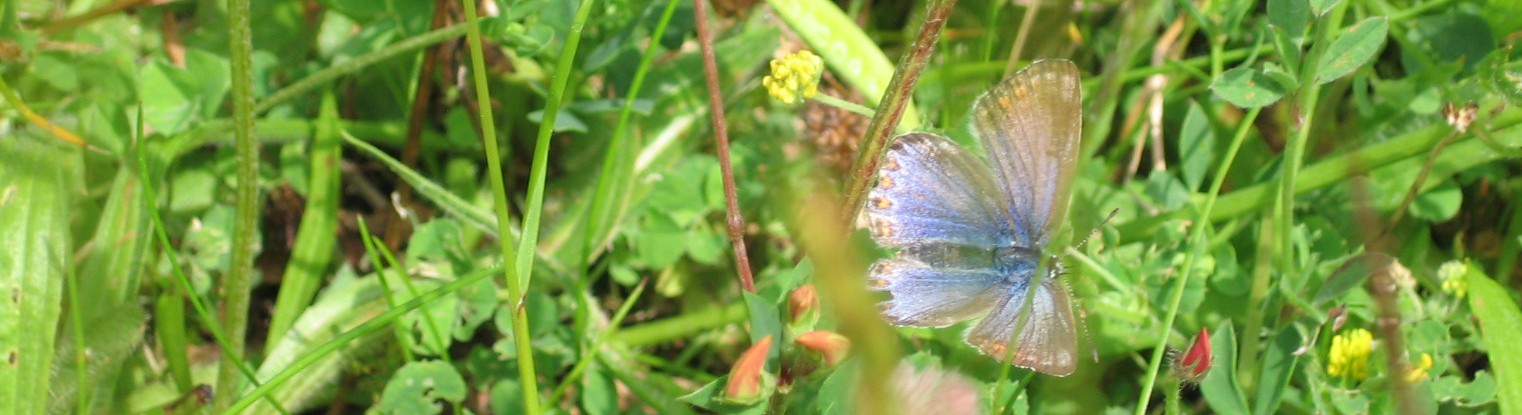
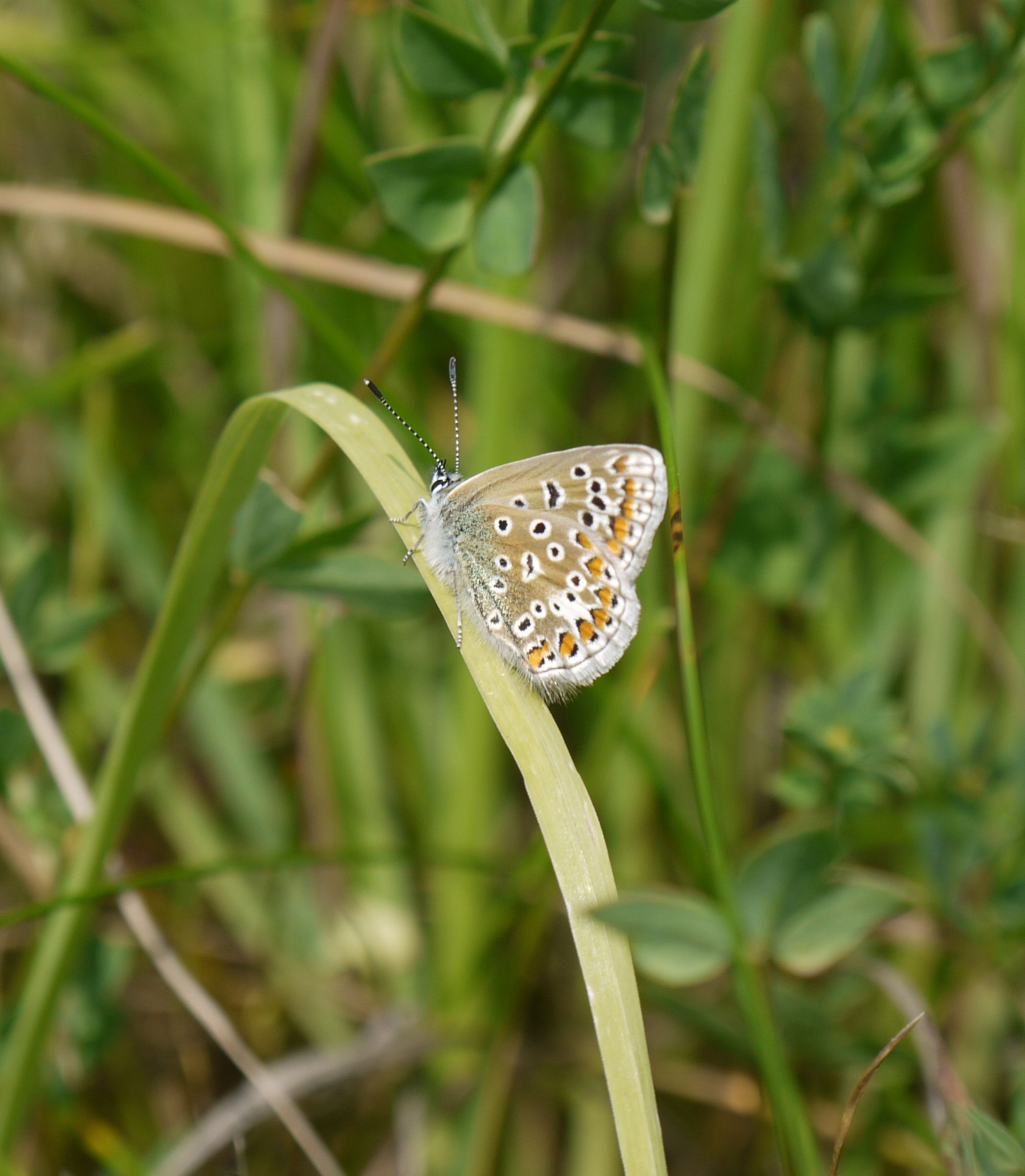
The group walked a circuit around the old Blue Rock Quarry. Although the height of the flowering season has now passed for many plants, there were still quite a few in flower including Burnet-saxifrage (Pimpinella saxifraga), Hare’s-foot Clover (Trifolium arvense), Red Bartsia (Odontites verna), Lucerne (Medicago sativa) and others. There were plenty of butterflies around, including a few Marbled Whites (Melanargia galathea), by now looking somewhat worn. As well as these we saw Large, Small and Essex Skippers, Large and Small Whites, Small Copper, Gatekeeper, Meadow Brown, Common Blue, Comma and Red Admiral.
There was a noticeable passage of migrating Swifts heading south at one point, and quite a few House Martins feeding high overhead. We did particularly well for raptors, seeing Buzzard, Kestrel, Peregrine and Sparrowhawk. A pair of Ravens also flew overhead while we were looking around the Wildlife Trust’s viewpoint near the dolerite crags. Small songbirds were relatively quiet as expected for the time of year but we did see quite a few Goldfinches.
The highlight of the day was the discovery of a Six-belted Clearwing moth (Bembecia ichneumoniformis) on the Wildlife Trust’s Portway Hill reserve. This unusual moth mimics hoverfly species with its black and yellow stripes and clear wings, and is patchily distributed throughout parts of the southern half of Britain. It’s a great find for the Rowley Hills and also shows that the management the Wildlife Trust are carrying out on their land is contributing positively to biodiversity.
Another highlight was a Roesel’s Bush-cricket (Metrioptera roeselii), a medium-sized cricket which has been expanding its range north over the past few decades.
After a few hours of enjoyable wandering, sharing of knowledge and great wildlife sightings, it was time to head back home for a late lunch!