Following a warm April with days of uninterrupted sunshine, May has been rather disappointing with cool and unsettled conditions and temperatures below the seasonal average.
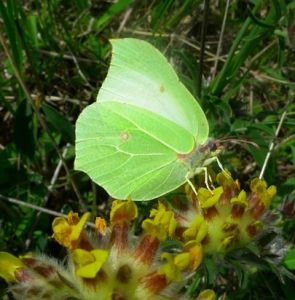
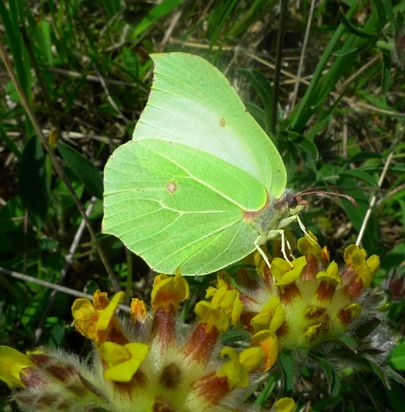
Brimstone butterfly (Gonepteryx rhamni) (image © Mike Poulton)
Peacocks and Small Tortoiseshells were the first butterflies to show on the hillside this spring and good numbers of both could be seen throughout April. On 9th April I recorded my first Brimstone for the Rowley Hills. This is a strong flying butterfly and merely passing through the site as neither of the caterpillar’s food plants, Buckthorn and Alder Buckthorn, occur anywhere on Rowley Hills.
As we moved into May there were very few butterflies and day-flying moths on the wing and my count for the month was well down on previous years.

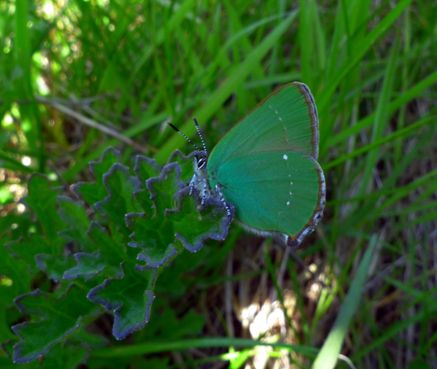
Green Hairstreak butterfly (Callophrys rubi) (image © Mike Poulton)
On the 15th a Green Hairstreak was seen in the hawthorn-colonised meadow near the top of Portway Hill. The following week, on the 21st a second individual showed further down the hillside on the land owned by the Wildlife Trust. This small, inconspicuous butterfly overwinters as a chrysalis and is one of the first to appear when conditions are favourable in the spring. At rest, always with closed wings, the green coloration of the lower wing merges in with the surrounding vegetation and it is only on calm, sunny days when in flight that the brown upper side of the wing is visible. There is only one generation of Green Hairstreaks each year and when blustery and cool conditions prevail for days on end without sunshine, very little flying activity takes place. The butterflies stay well down in the foliage for protection from the wind and rain and there they remain until conditions improve. Small colonies such as this one, with little chance of natural recolonization from a site nearby, face local extinction when the short-lived adult butterflies perish before they have an opportunity to mate.
The Small Heath is another notable butterfly found on the Rowley Hills and individuals are just beginning to appear. They range across the whole of the hillside and can be seen from May right through to August. Fine-leaved grasses are the caterpillar’s food plant and the threat to the future survival of this species on the Rowley Hills is from encroachment to the grassland from bramble and hawthorn. When at rest, always with wings folded, they are exceptionally difficult to locate.
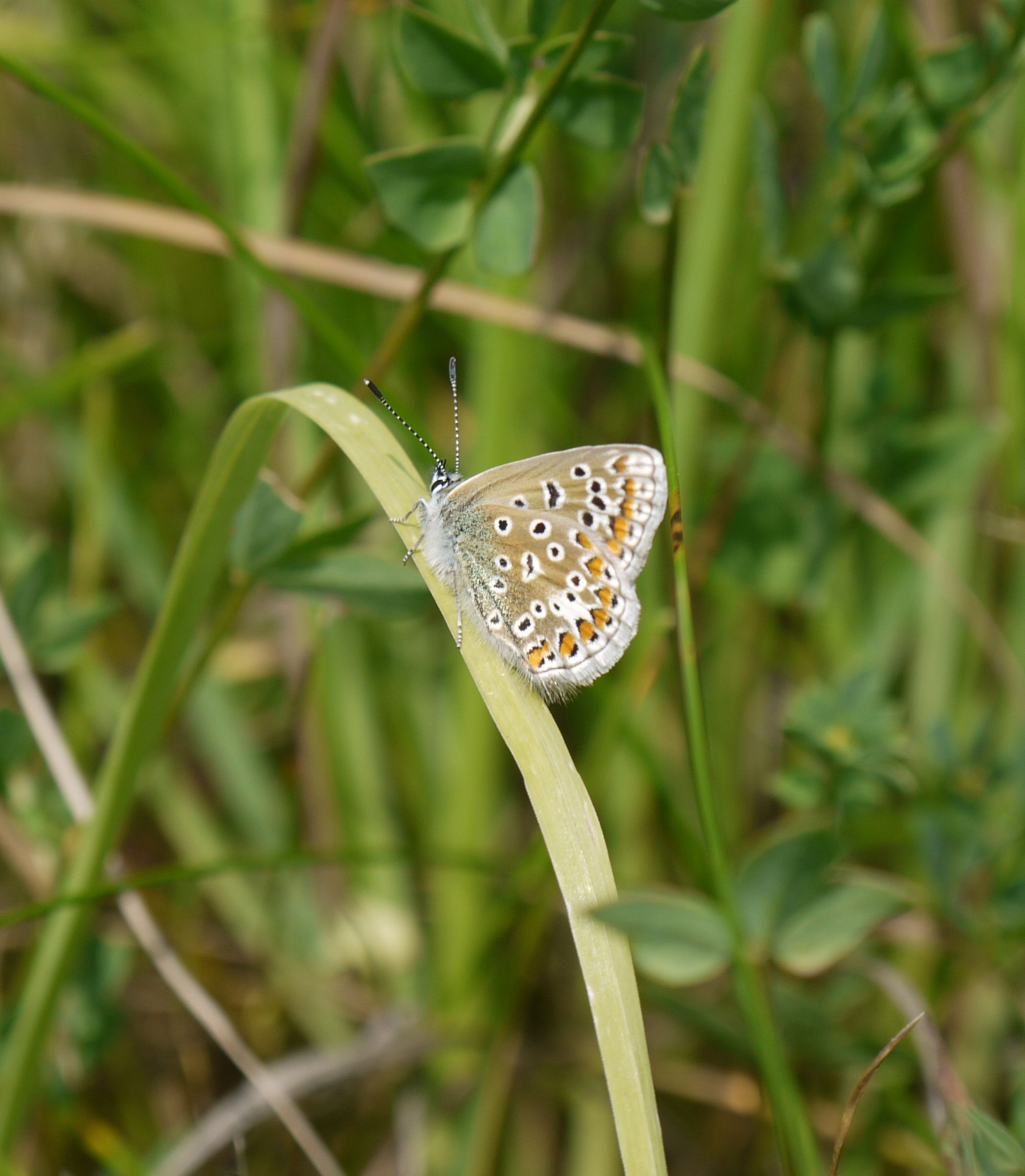
Another species that first appears in May is the Common Blue. On Rowley Hills there are two generations of this butterfly each year. The first generation is on the wing during May and June with the second generation appearing in August and September. Few Common Blues have so far been seen and this could impact seriously on second generation numbers later in the summer.
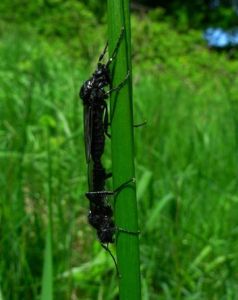
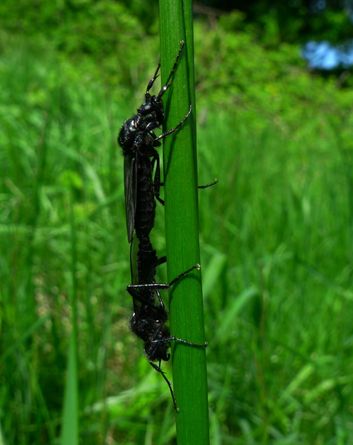
St Mark’s Fly (Bibio marci) (image © Mike Poulton)
St Mark’s Flies have been exceptionally abundant on the hillside this spring and towards the end of April and the first week of May, wherever one walked, these large, black flies could be seen alighting on grass stems and hovering around hawthorn bushes. Their season is short and by the middle of May they had all gone.
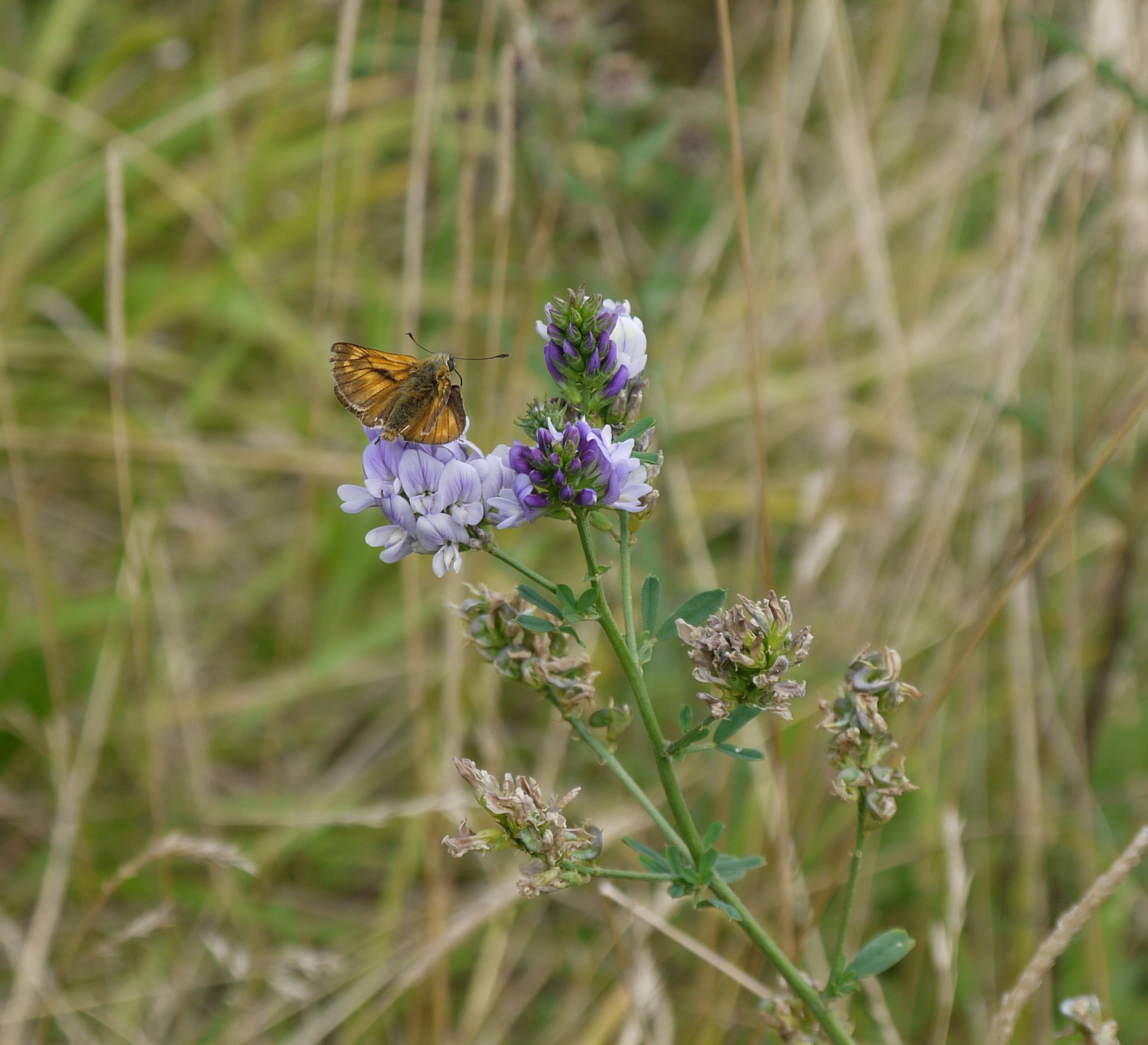
Bumble Bees have been fairly common this spring and, unlike butterflies and moths, they will fly in blustery and overcast conditions. The early flowering Bush Vetch, whose flowers are a rich source of nectar is particularly common up here on the hillside and eagerly sought after by bees.
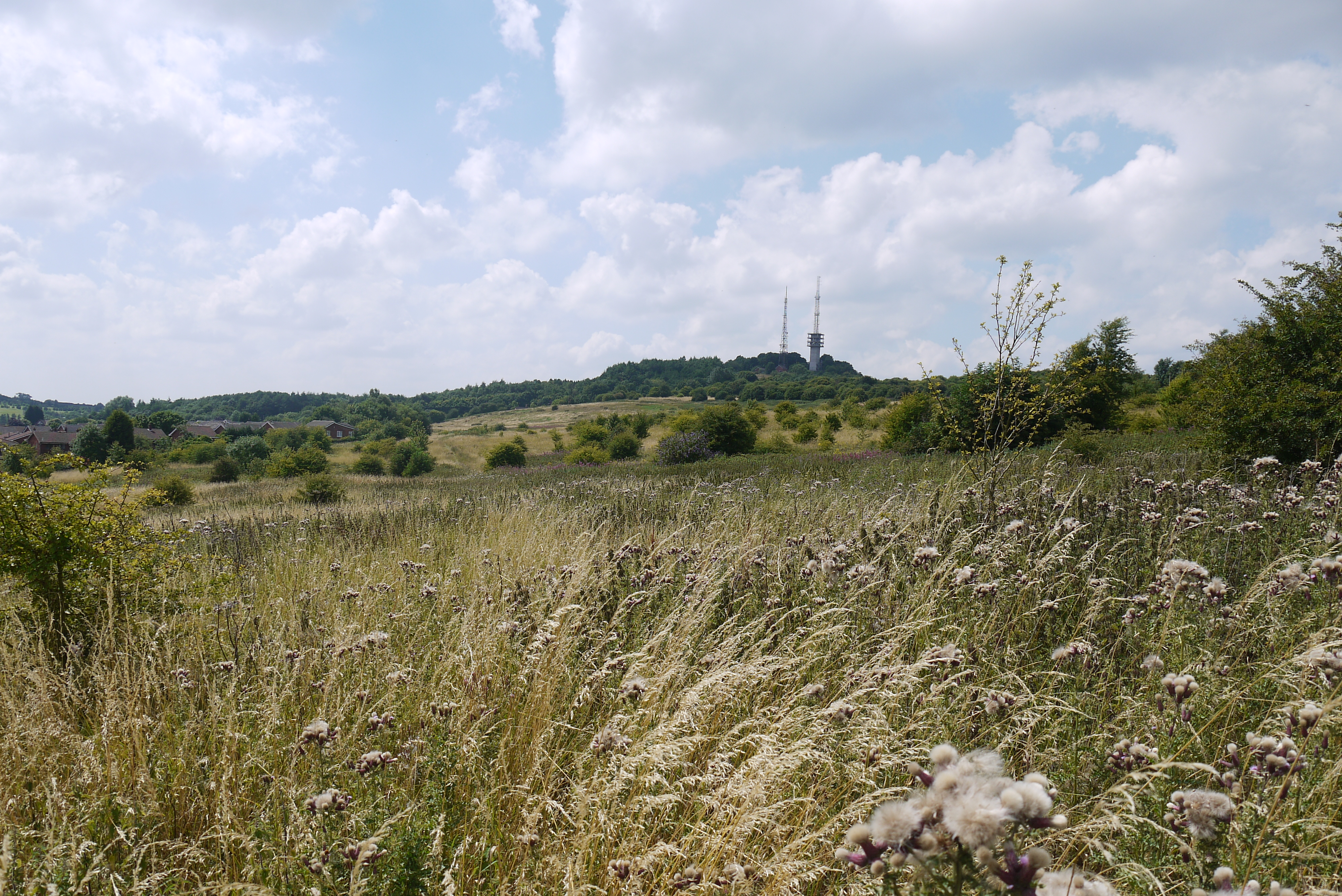
As we move into June many of the early summer-flowering plants such as Oxeye Daisies, Broom, Bird’s-foot Trefoil, Common Vetch, Oxford Ragwort, Hairy Tare, Mouse-ear hawkweed, Beaked Hawk’s-beard and Hogweed are now in flower and June and July are the optimum months to visit the Rowley Hills to see the butterflies and flowers at their best.
During the winter of 2012, a sowing of Yellow-rattle was carried out on the Wildlife Trust site. This annual is partly parasitic on roots of grasses and the purpose of the sowing was to reduce the vigour of the coarse grasses and encourage the spread of the wild flowers found here. The sowing has been a great success with thousands of these yellow-flowered annuals blooming and spreading throughout the hillside. A particularly impressive display can at the time of writing be seen on the Wildlife Trust site.
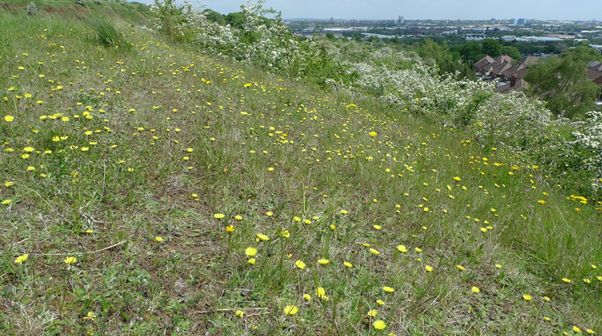
Water-stressed bank overlooking houses where Tall Mouse-ear Hawkweed can be found
Late May and early June is the optimum time to search for the flowers of Tall Mouse-ear Hawkweed on the steep-sided bank overlooking the houses where it is mixed in with other similar-looking yellow, dandelion-like flowers and with which it can easily be confused. This is one of several uncommon plants that thrive up here on the Rowley Hills and although not a native plant in Britain it nevertheless looks very natural where it is growing.
Hopefully, during the next few months we can look forward to long sunny days with not too many wet days in between. Butterfly numbers should start to recover this month and all of the rain we have experienced over the past month should keep the vegetation looking fresh and green for weeks to come.
Mike Poulton 04/06/2015
 We’ve had some more coverage of our concerns about the proposed redevelopment of Edwin Richards Quarry, this time in Halesowen News. Although we did not give any direct statements to the newspaper (all the quotes attributed to us are lifted directly from our objection letter) the article gives a good outline of our position regarding the proposals. We’ve never referred to ourselves as a ‘pressure group’ though – we like to think we’re a bit friendlier than that!






 Friends of Rowley Hills