Tag Archives: butterflies

Special offer on Butterflies of the West Midlands book!

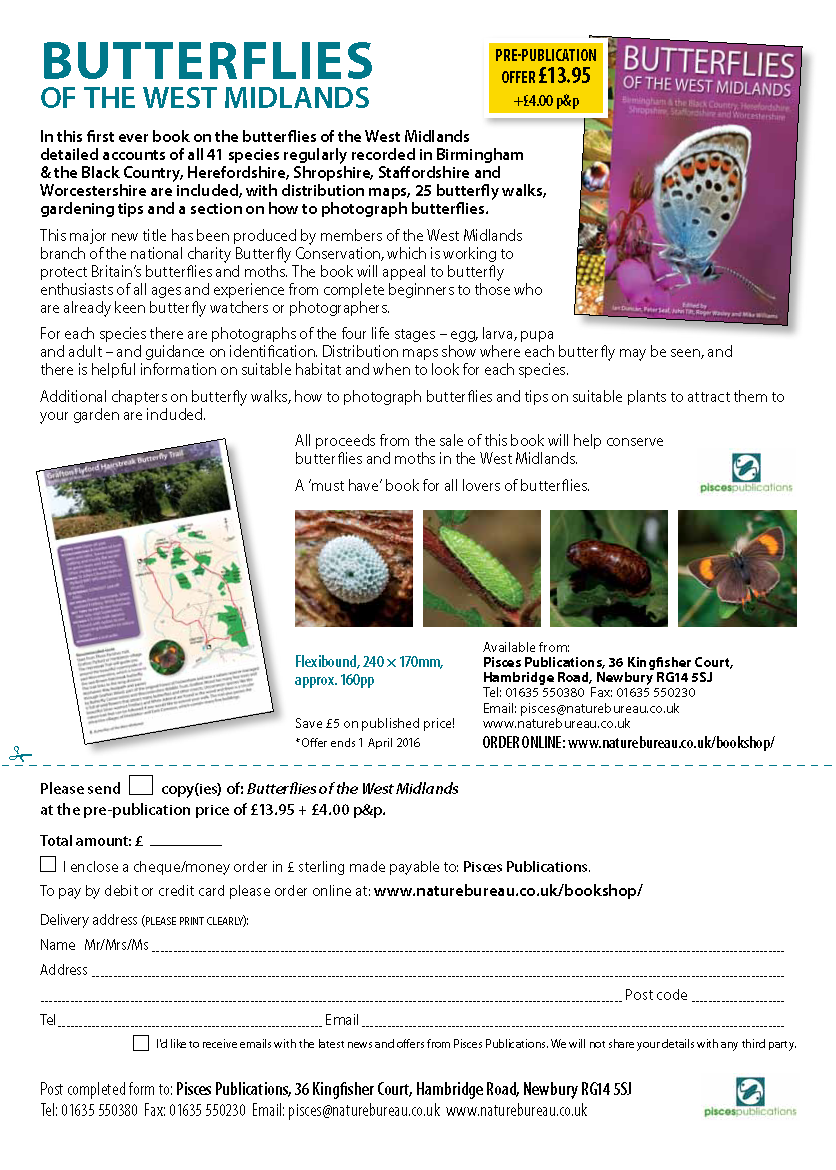
A new book about the butterflies of the West Midlands will be launched later this spring; this is the first ever book about the West Midlands’ butterflies and includes a wealth of information about the species seen in the area, distribution maps, butterfly walks, gardening and photography tips. It even contains a guided walk of the Rowley Hills written by the Friends of Rowley Hills’ Vice-Chair Mike Poulton. It’s a must-have for butterfly fans!

The book can currently be pre-ordered at the special pre-publication price of £13.95 + £4.00 p&p; once published the price will increase to £18.95 + £4.00 p&p so take the chance to grab a bargain now! For more information and an order form, see below; you can also order online at http://www.naturebureau.co.uk/bookshop/.

Butterflies of the West Midlands pre-pub offer 02

Rowley Hills butterflies in a new report and book

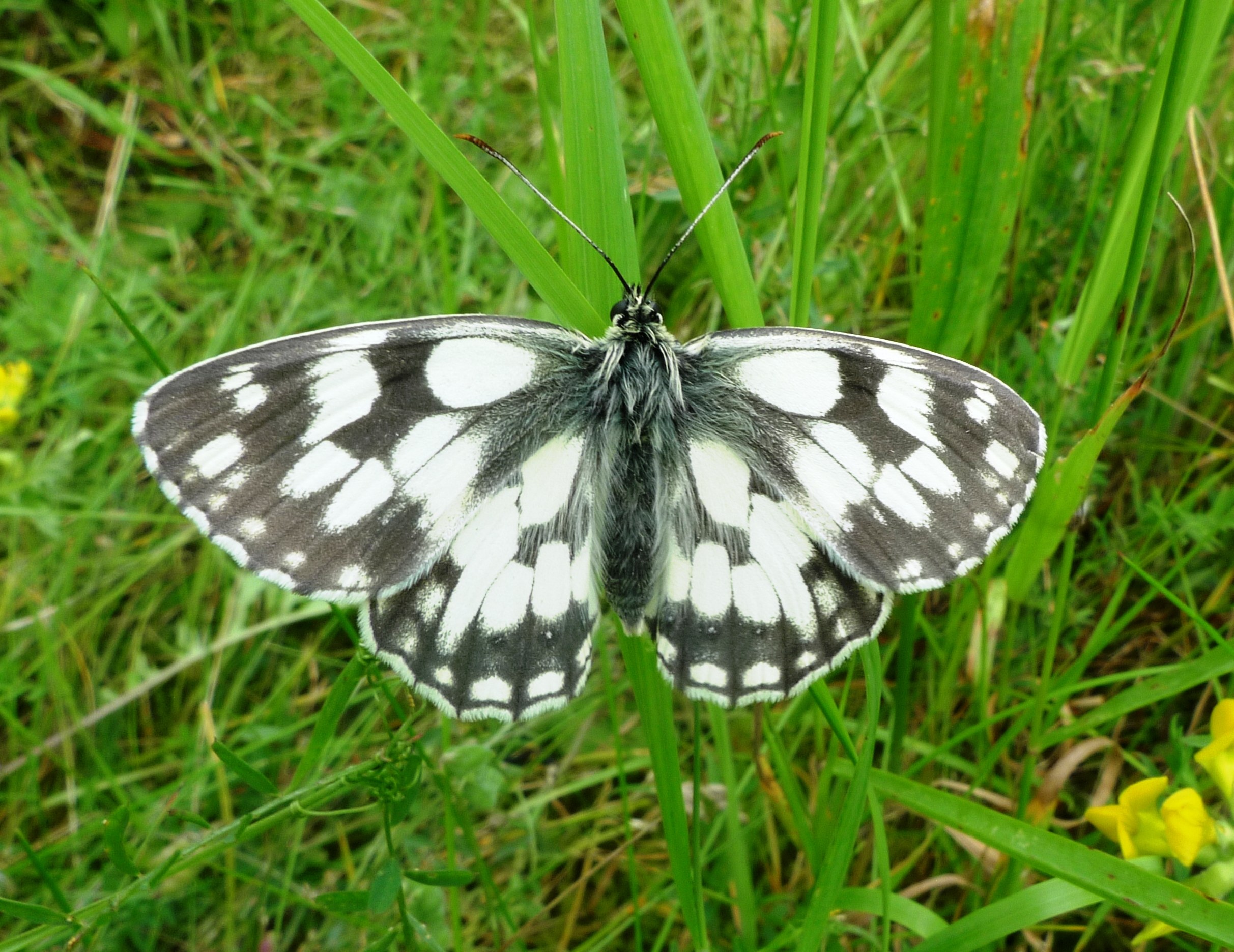
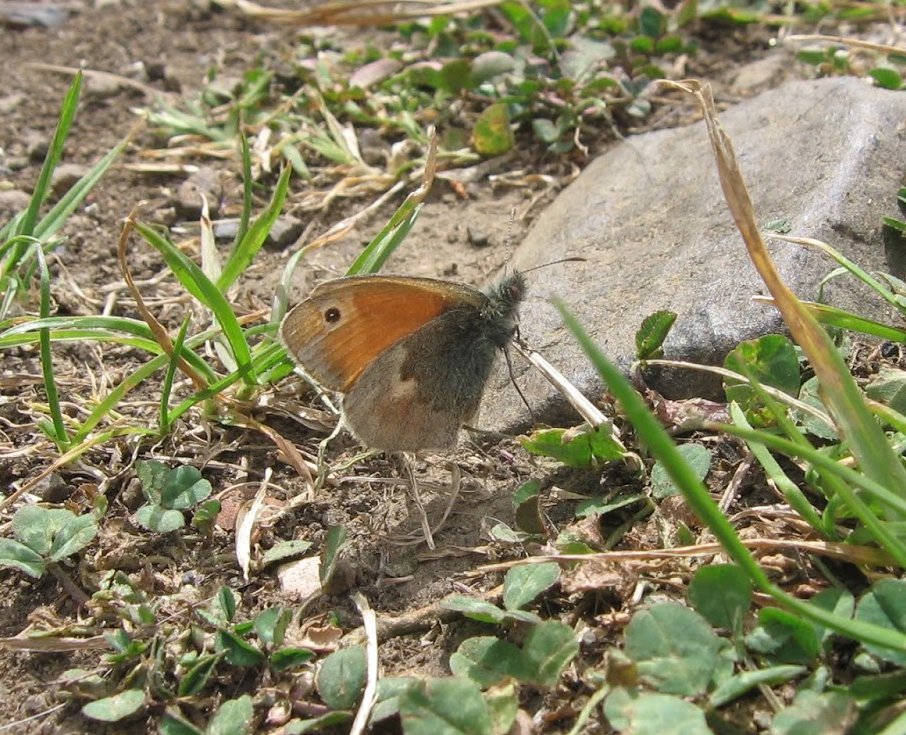
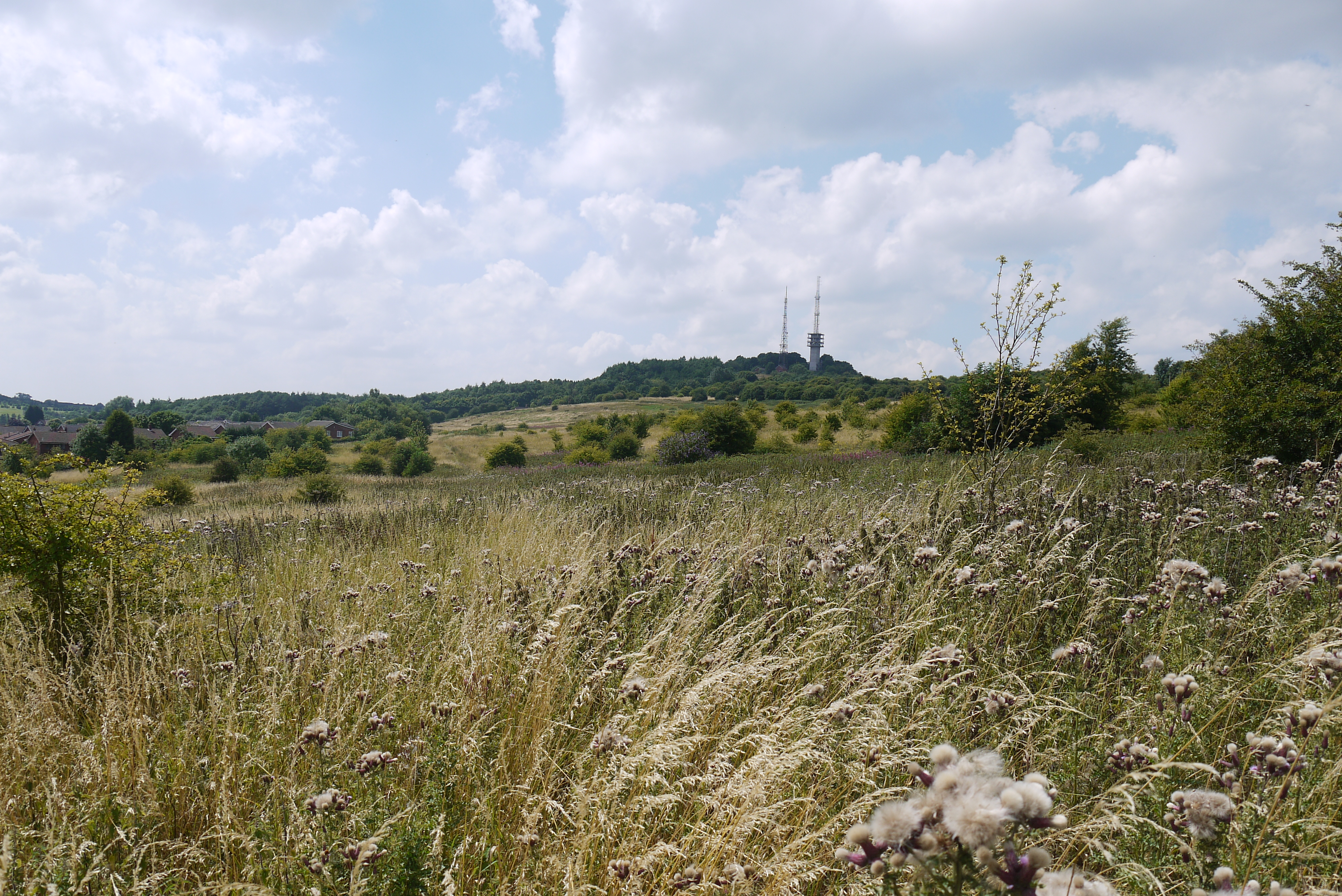
The large expanse of open, uninterrupted grassland on the Rowley Hills situated between Portway Hill and the Birmingham New Road, known as Portway Hill Open Space, is currently one of the best sites in the West Midlands for Marbled White and Small Heath butterflies. Mike Poulton has been studying populations of these two butterfly species for the past five years and has produced a short report summarising his findings so far. The overall picture is a mixed one, with Marbled Whites thriving but Small Heaths declining. Click here to read the full report.

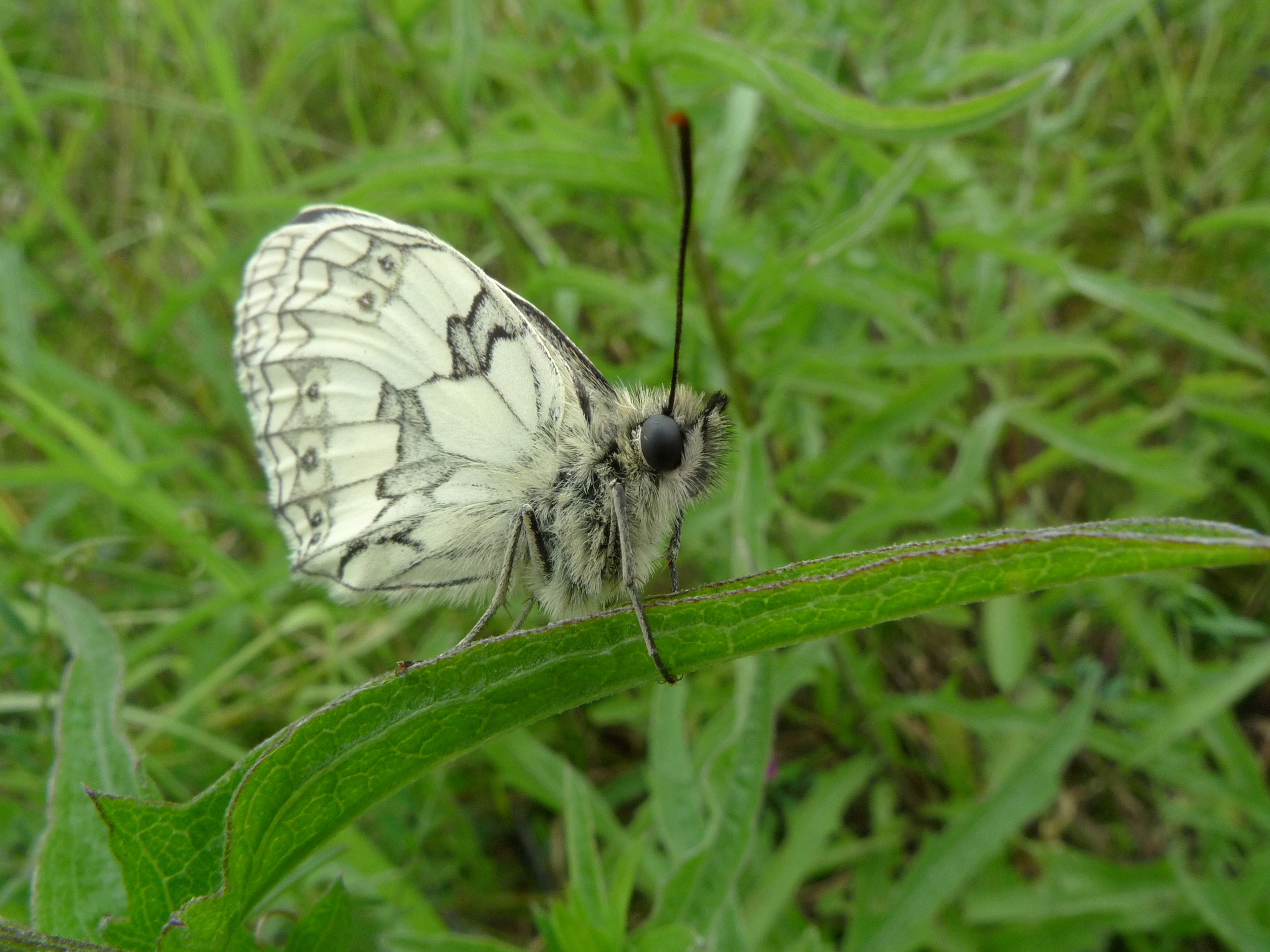
Marbled White butterfly (Melanargia galanthea) (image © Mike Poulton)

Marbled White butterfly (Melanargia galanthea) (image © Mike Poulton)

Small Heath butterfly (Coenonympha pamphilus) (image © Jane Tavener)

Small Heath butterfly (Coenonympha pamphilus) (image © Jane Tavener)


In related news, Pisces Publications have a pre-publication offer on for ‘Butterflies of the West Midlands’. This new book, the first ever on the butterflies of the West Midlands, includes a butterfly walk on Portway Hill; it will be launched in Spring 2016 and can be ordered from http://www.naturebureau.co.uk/bookshop/butterflies-west-mids-detail.

Butterflies of the West Midlands

Butterflies of the West Midlands book.

Report from SandNats walk

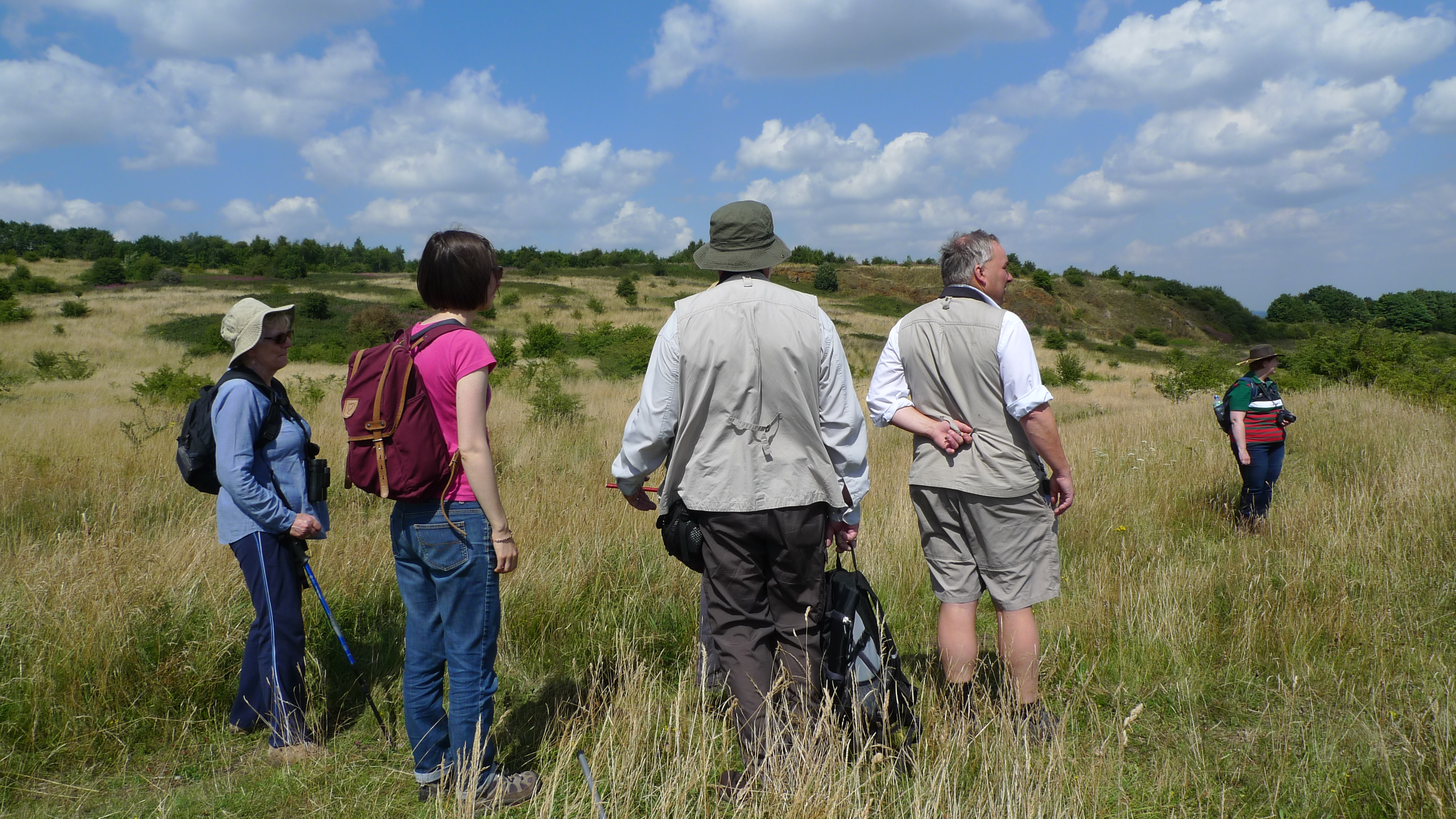
SandNats exploring the Rowley Hills (image © Mike Poulton)

SandNats exploring the Rowley Hills (image © Mike Poulton)

SandNats exploring the Rowley Hills (image © Mike Poulton)

SandNats exploring the Rowley Hills (image © Mike Poulton)

On Saturday SandNats (Sandwell Valley Naturalists’ Club) held a guided walk on the Rowley Hills, concentrating on wildflowers and invertebrates. The weather was perfect – warm and sunny – giving optimum conditions for spotting insects, and the walk was a great success, with several rare insect species being recorded.


The group walked a circuit around the old Blue Rock Quarry. Although the height of the flowering season has now passed for many plants, there were still quite a few in flower including Burnet-saxifrage (Pimpinella saxifraga), Hare’s-foot Clover (Trifolium arvense), Red Bartsia (Odontites verna), Lucerne (Medicago sativa) and others. There were plenty of butterflies around, including a few Marbled Whites (Melanargia galathea), by now looking somewhat worn. As well as these we saw Large, Small and Essex Skippers, Large and Small Whites, Small Copper, Gatekeeper, Meadow Brown, Common Blue, Comma and Red Admiral.

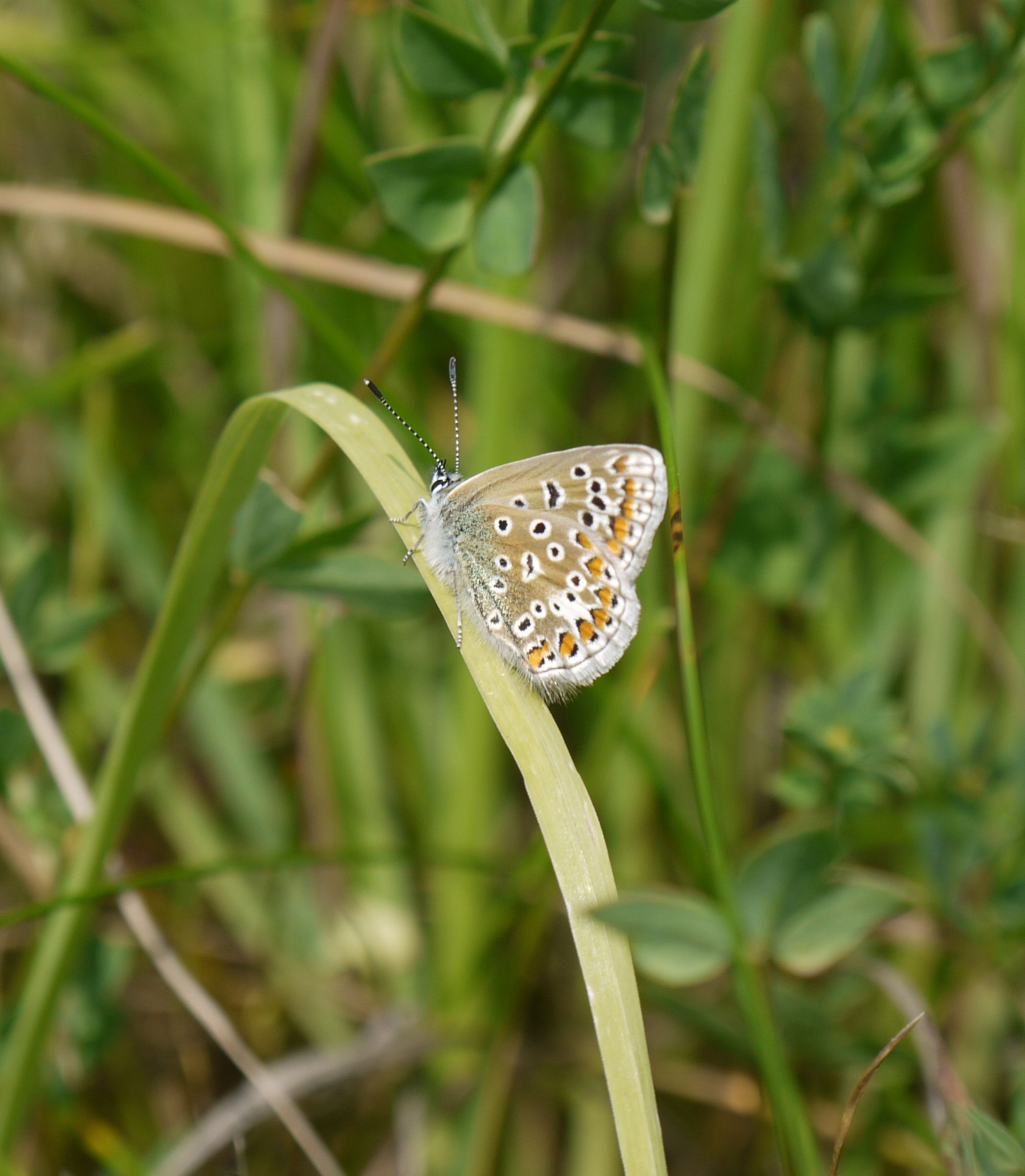
Common Blue (Polyommatus icarus) (image © Jane Tavener)

Common Blue (Polyommatus icarus) (image © Jane Tavener)

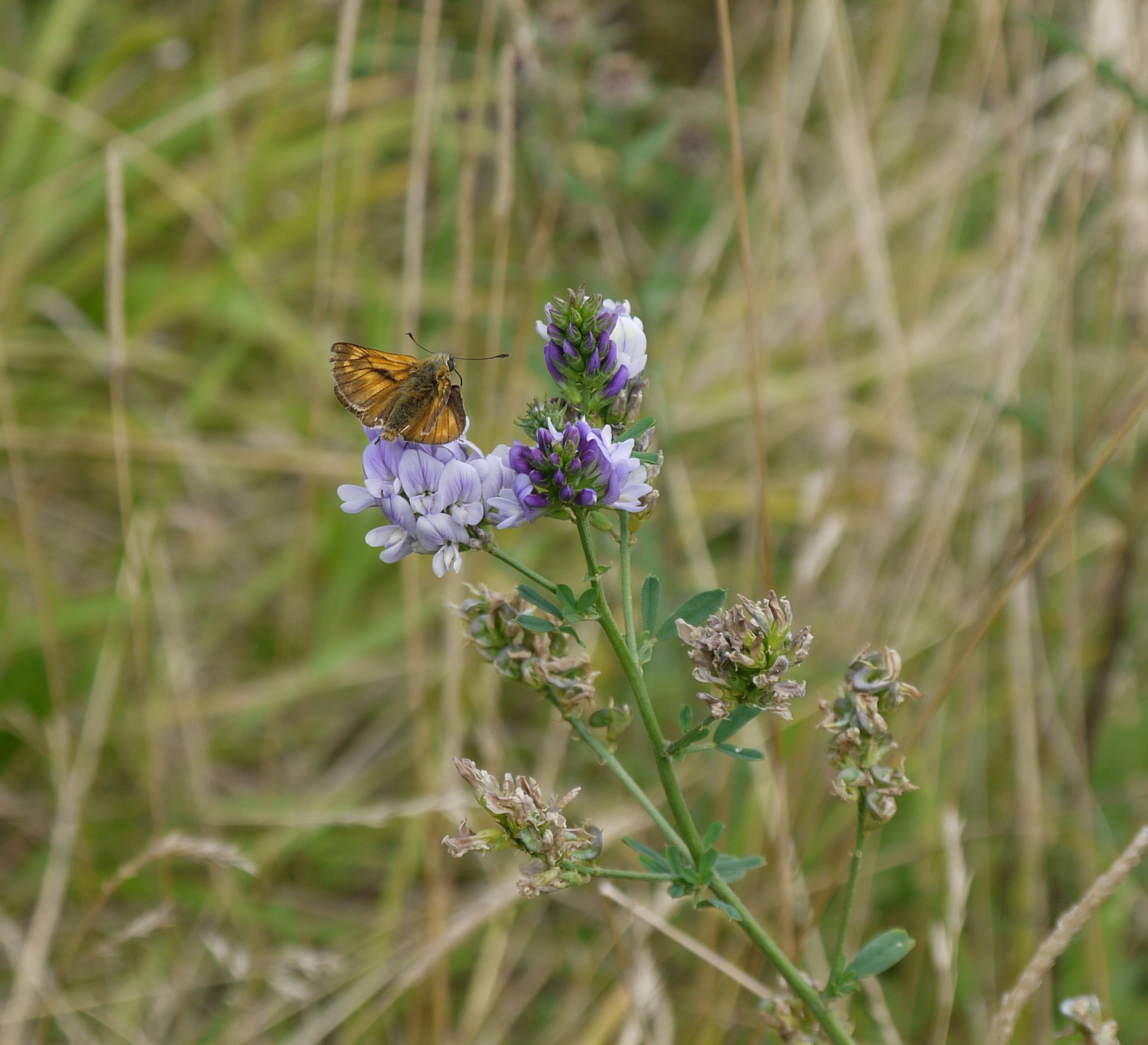
Large Skipper (Ochlodes sylvanus) on Lucerne (Medicago sativa) (image © Jane Tavener)

Large Skipper (Ochlodes sylvanus) on Lucerne (Medicago sativa) (image © Jane Tavener)

Robin's Pincushion gall produced by the wasp Diplolepis rosae (image © Jane Tavener)

Robin’s Pincushion gall produced by the wasp Diplolepis rosae (image © Jane Tavener)


There was a noticeable passage of migrating Swifts heading south at one point, and quite a few House Martins feeding high overhead. We did particularly well for raptors, seeing Buzzard, Kestrel, Peregrine and Sparrowhawk. A pair of Ravens also flew overhead while we were looking around the Wildlife Trust’s viewpoint near the dolerite crags. Small songbirds were relatively quiet as expected for the time of year but we did see quite a few Goldfinches.

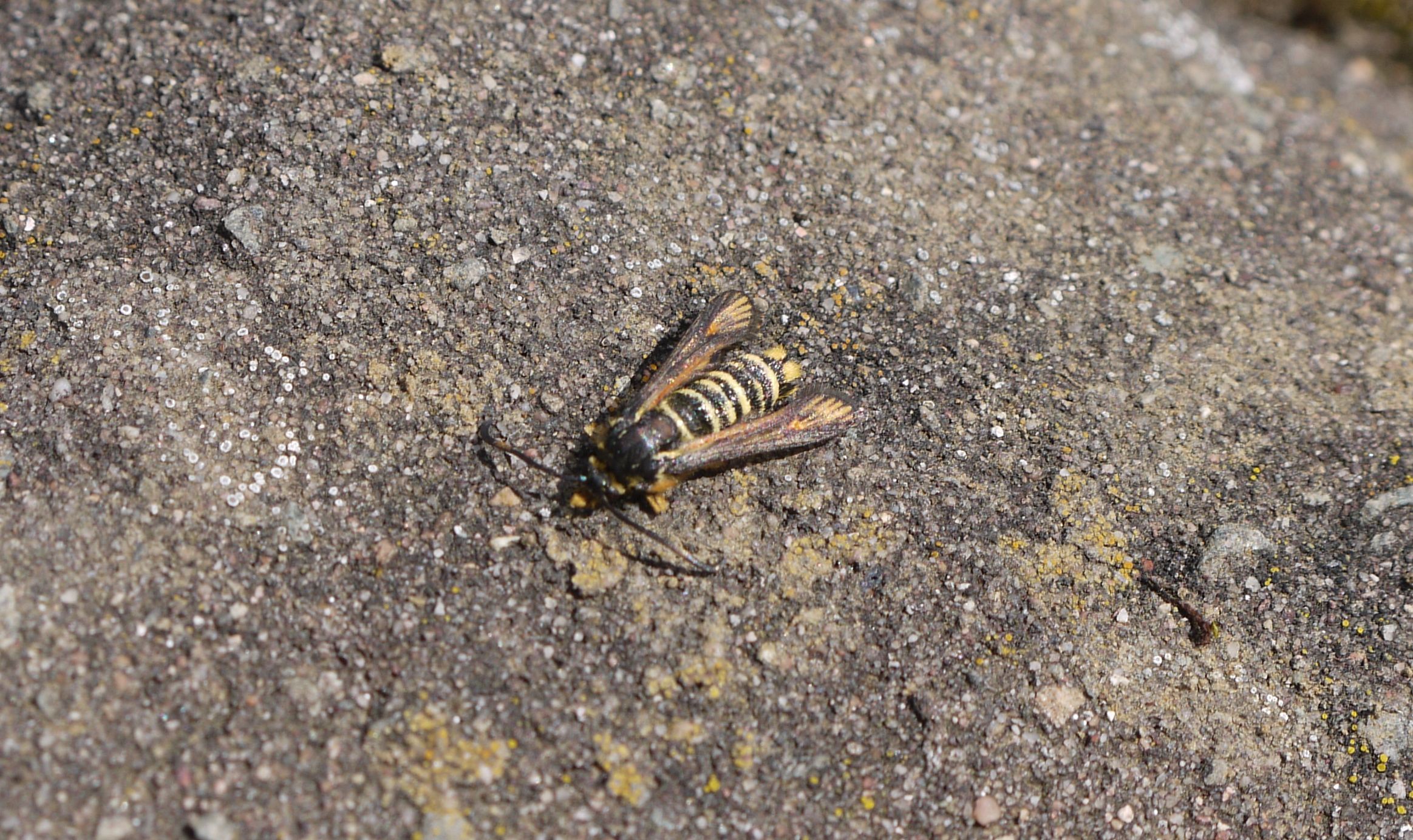
Six-belted Clearwing (Bembecia ichneumoniformis) (image © Jane Tavener)

Six-belted Clearwing (Bembecia ichneumoniformis) (image © Jane Tavener)

The highlight of the day was the discovery of a Six-belted Clearwing moth (Bembecia ichneumoniformis) on the Wildlife Trust’s Portway Hill reserve. This unusual moth mimics hoverfly species with its black and yellow stripes and clear wings, and is patchily distributed throughout parts of the southern half of Britain. It’s a great find for the Rowley Hills and also shows that the management the Wildlife Trust are carrying out on their land is contributing positively to biodiversity.

Roesel's Bush-cricket (Metrioptera roeselii) (image © Jane Tavener)

Roesel’s Bush-cricket (Metrioptera roeselii) (image © Jane Tavener)

Another highlight was a Roesel’s Bush-cricket (Metrioptera roeselii), a medium-sized cricket which has been expanding its range north over the past few decades.


After a few hours of enjoyable wandering, sharing of knowledge and great wildlife sightings, it was time to head back home for a late lunch!

The Rowley Hills 8th August 2015 (image © Jane Tavener)

The Rowley Hills 8th August 2015 (image © Jane Tavener)

Rowley Hills butterfly walk to be published by Butterfly Conservation

11th June 2015

Marbled White (Melanargia galanthea) (image © Mike Poulton)

A butterfly walk across Portway Hill written by FORH member Mike Poulton has been selected for inclusion in a new book by Butterfly Conservation. It will be one of 25 butterfly walks in the book, to be published in 2016. Butterfly Conservation is the leading UK charity dedicated to saving butterflies, moths and our environment. More news on the book as we have it!

Rowley Hills wildlife update – April and May 2015

11th June 2015

Here is the latest wildlife update from the Rowley Hills, written by plant and butterfly expert Mike Poulton.

Following a warm April with days of uninterrupted sunshine, May has been rather disappointing with cool and unsettled conditions and temperatures below the seasonal average.
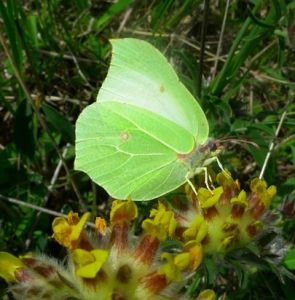
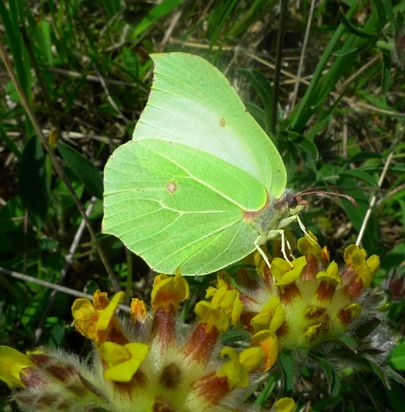
Brimstone butterfly (Gonepteryx rhamni) (image © Mike Poulton)

Brimstone butterfly (Gonepteryx rhamni) (image © Mike Poulton)

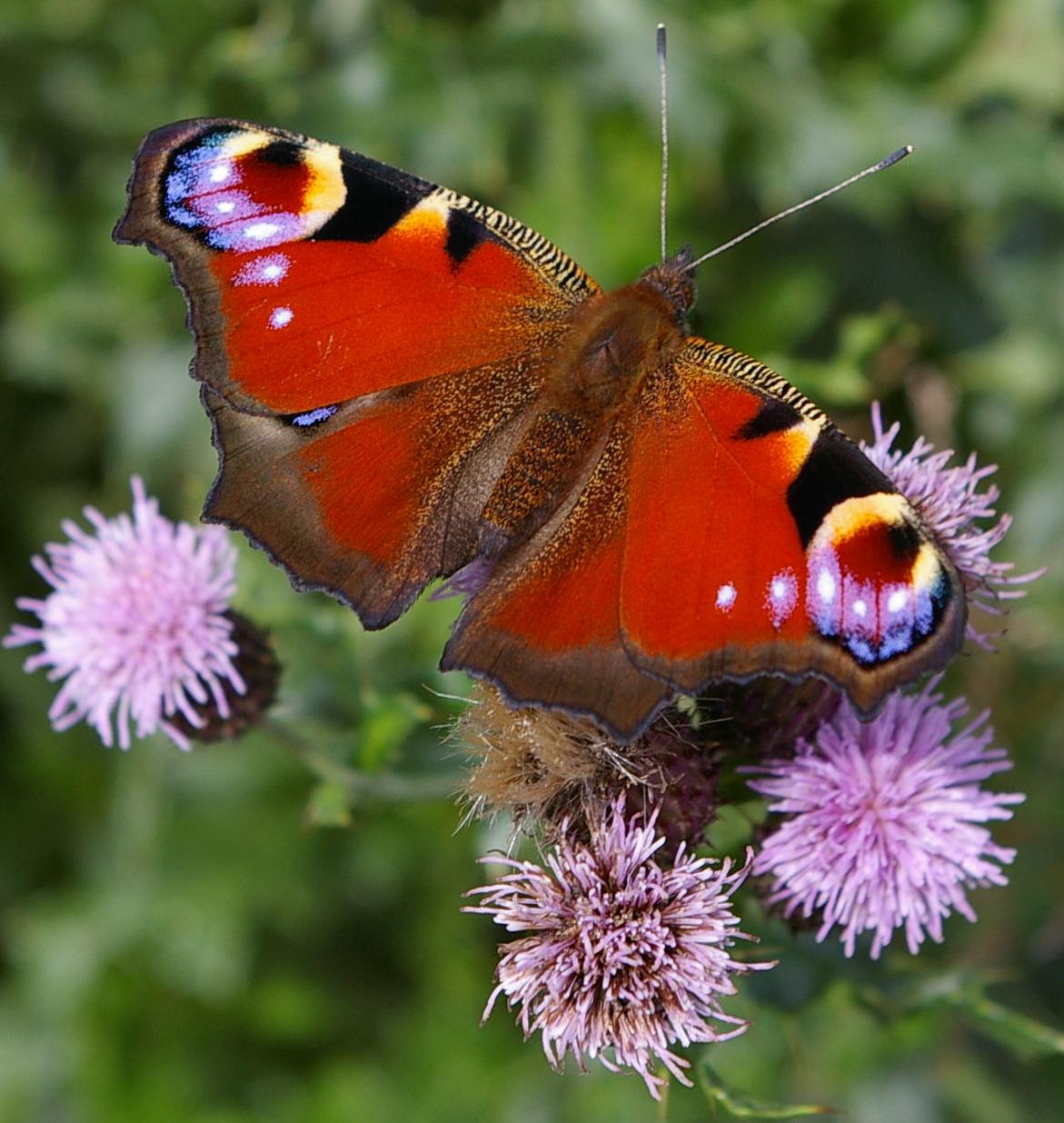
Peacocks and Small Tortoiseshells were the first butterflies to show on the hillside this spring and good numbers of both could be seen throughout April.  On 9th April I recorded my first Brimstone for the Rowley Hills. This is a strong flying butterfly and merely passing through the site as neither of the caterpillar’s food plants, Buckthorn and Alder Buckthorn, occur anywhere on Rowley Hills.

As we moved into May there were very few butterflies and day-flying moths on the wing and my count for the month was well down on previous years.

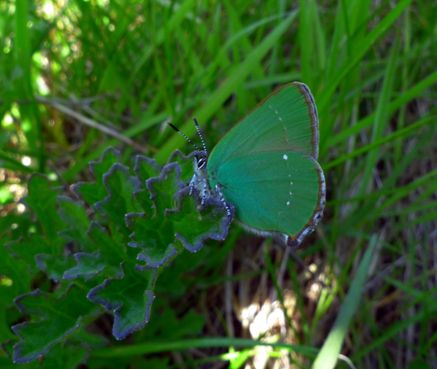
Green Hairstreak butterfly (Callophrys rubi) (image © Mike Poulton)

Green Hairstreak butterfly (Callophrys rubi) (image © Mike Poulton)

On the 15th a Green Hairstreak was seen in the hawthorn-colonised meadow near the top of Portway Hill. The following week, on the 21st a second individual showed further down the hillside on the land owned by the Wildlife Trust. This small, inconspicuous butterfly overwinters as a chrysalis and is one of the first to appear when conditions are favourable in the spring. At rest, always with closed wings, the green coloration of the lower wing merges in with the surrounding vegetation and it is only on calm, sunny days when in flight that the brown upper side of the wing is visible. There is only one generation of Green Hairstreaks each year and when blustery and cool conditions prevail for days on end without sunshine, very little flying activity takes place. The butterflies stay well down in the foliage for protection from the wind and rain and there they remain until conditions improve. Small colonies such as this one, with little chance of natural recolonization from a site nearby, face local extinction when the short-lived adult butterflies perish before they have an opportunity to mate.

The Small Heath is another notable butterfly found on the Rowley Hills and individuals are just beginning to appear. They range across the whole of the hillside and can be seen from May right through to August. Fine-leaved grasses are the caterpillar’s food plant and the threat to the future survival of this species on the Rowley Hills is from encroachment to the grassland from bramble and hawthorn. When at rest, always with wings folded, they are exceptionally difficult to locate.

Another species that first appears in May is the Common Blue. On Rowley Hills there are two generations of this butterfly each year. The first generation is on the wing during May and June with the second generation appearing in August and September. Few Common Blues have so far been seen and this could impact seriously on second generation numbers later in the summer.
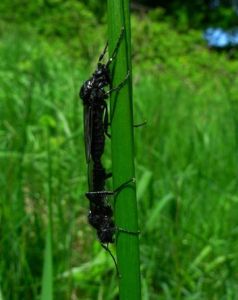
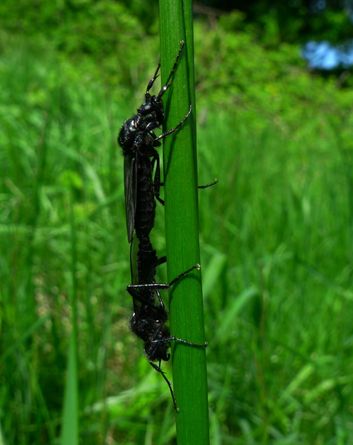
St Mark's Fly (Bibio marci) (image © Mike Poulton)

St Mark’s Fly (Bibio marci) (image © Mike Poulton)

St Mark’s Flies have been exceptionally abundant on the hillside this spring and towards the end of April and the first week of May, wherever one walked, these large, black flies could be seen alighting on grass stems and hovering around hawthorn bushes.  Their season is short and by the middle of May they had all gone.

Bumble Bees have been fairly common this spring and, unlike butterflies and moths, they will fly in blustery and overcast conditions. The early flowering Bush Vetch, whose flowers are a rich source of nectar is particularly common up here on the hillside and eagerly sought after by bees.

As we move into June many of the early summer-flowering plants such as Oxeye Daisies, Broom, Bird’s-foot Trefoil, Common Vetch, Oxford Ragwort, Hairy Tare, Mouse-ear hawkweed, Beaked Hawk’s-beard and Hogweed are now in flower and June and July are the optimum months to visit the Rowley Hills to see the butterflies and flowers at their best.

During the winter of 2012, a sowing of Yellow-rattle was carried out on the Wildlife Trust site. This annual is partly parasitic on roots of grasses and the purpose of the sowing was to reduce the vigour of the coarse grasses and encourage the spread of the wild flowers found here. The sowing has been a great success with thousands of these yellow-flowered annuals blooming and spreading throughout the hillside. A particularly impressive display can at the time of writing be seen on the Wildlife Trust site.
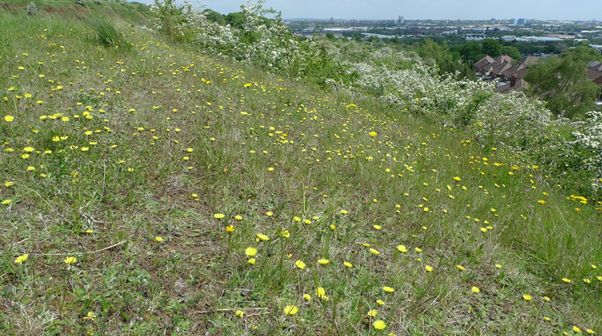
Water-stressed bank overlooking houses where Tall Mouse-ear Hawkweed can be found

Water-stressed bank overlooking houses where Tall Mouse-ear Hawkweed can be found

Late May and early June is the optimum time to search for the flowers of Tall Mouse-ear Hawkweed on the steep-sided bank overlooking the houses where it is mixed in with other similar-looking yellow, dandelion-like flowers and with which it can easily be confused. This is one of several uncommon plants that thrive up here on the Rowley Hills and although not a native plant in Britain it nevertheless looks very natural where it is growing.

Hopefully, during the next few months we can look forward to long sunny days with not too many wet days in between. Butterfly numbers should start to recover this month and all of the rain we have experienced over the past month should keep the vegetation looking fresh and green for weeks to come.

Mike Poulton 04/06/2015
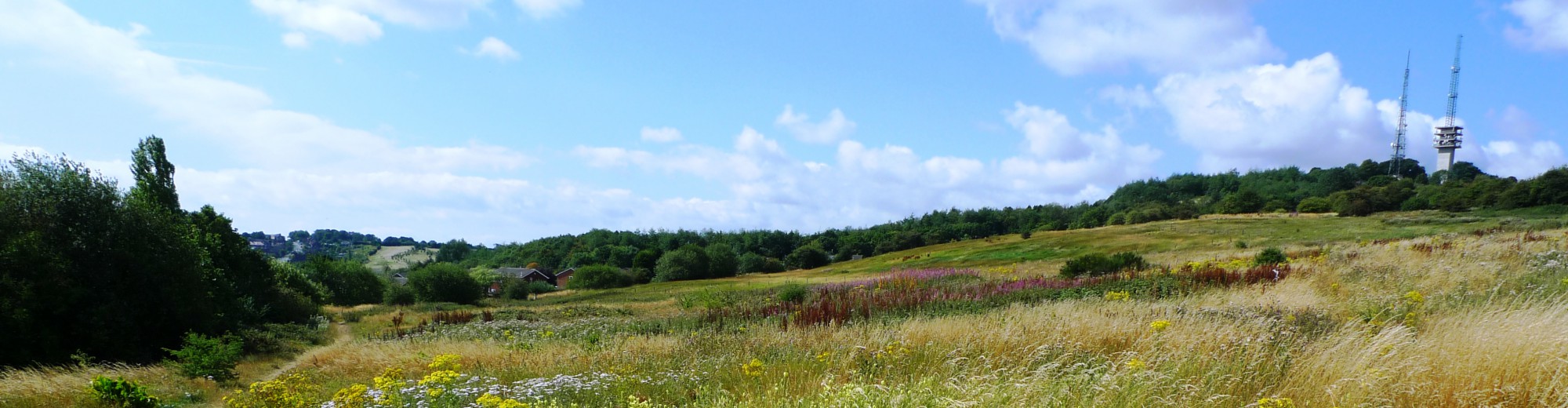
Easter on the Rowley Hills

8th April 2015

On Monday, plant and butterfly expert Mike Poulton carried out the first of his 2015 butterfly transects on the Rowley Hills, on the lookout for butterflies, birds, plants and other spring interest. Here is his report from the transect.

It’s Easter week and spring has finally arrived here on the Rowley Hills. The sun was shining brightly as I strolled across Portway Hill Nature Reserve on my first Butterfly Transect walk of 2015.
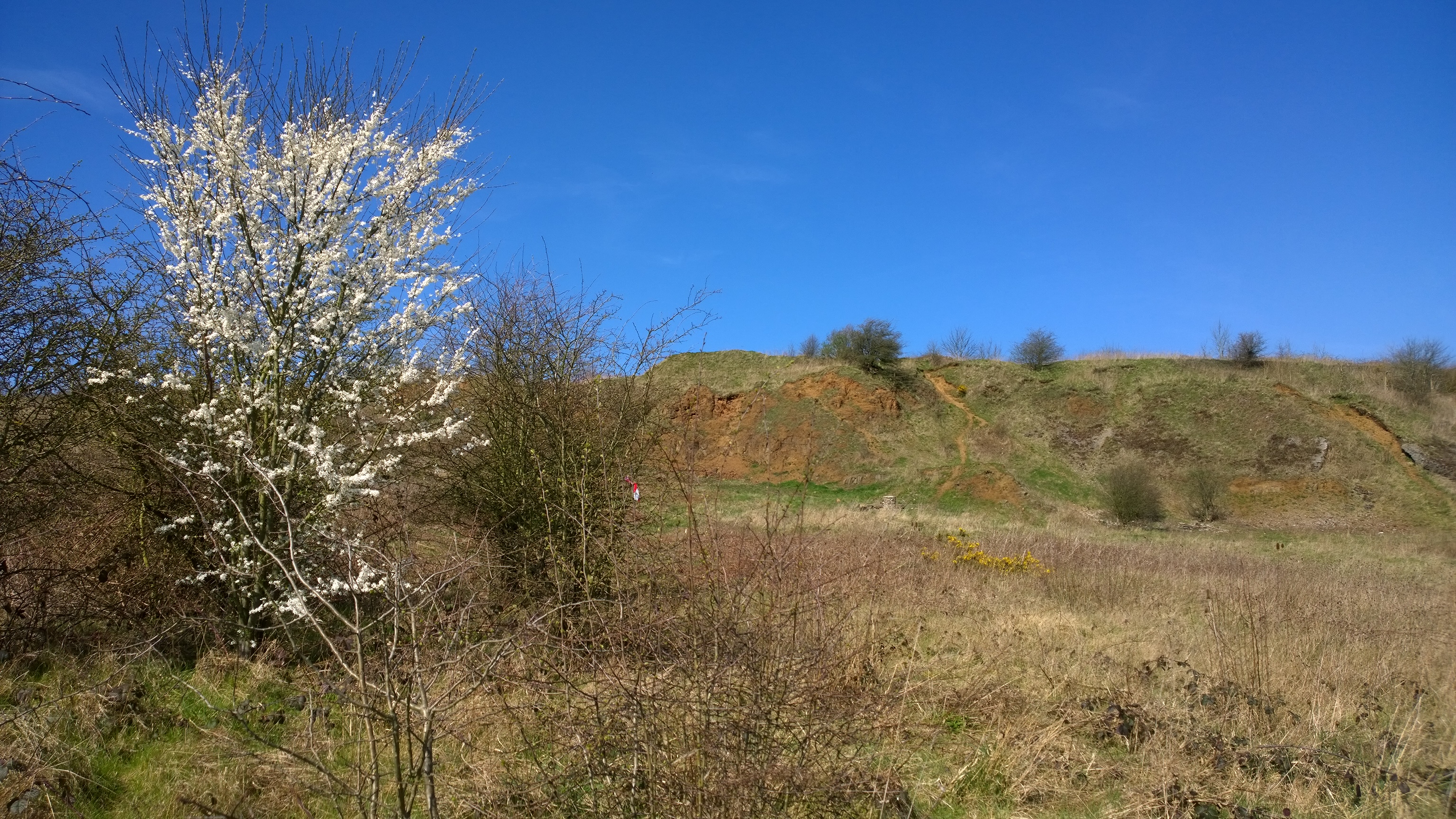
Cherry Plum (Prunus cerasifera) in the Rowley Hills (image ©Mike Poulton)

The main aims of a butterfly transect is to count numbers of each species of butterfly seen on a weekly basis at a given site throughout a full butterfly recording season from April to September inclusive. The chosen transect or route remains constant from year to year and is divided up into a maximum of 15 sections. A count of the butterflies seen in each section is carried out each week and the results entered onto a recording sheet. These records are then submitted to Butterfly Conservation’s ‘Butterfly Monitoring Scheme’. By keeping weekly records comparisons with previous years can be made showing which species are prospering and those that are doing badly. Comparisons can also be made of the dates when different butterflies first appear. For example, here on the Rowley Hills, in an average year the first Marbled Whites can be expected around the middle of June, reaching a peak during the first 10 days of July and then slowly tailing off through the second half of July with just an odd individual or two persisting into the first few days of August. A cold spring could delay this emergence by as much as two weeks. A warm spring will advance the first sighting by several days.

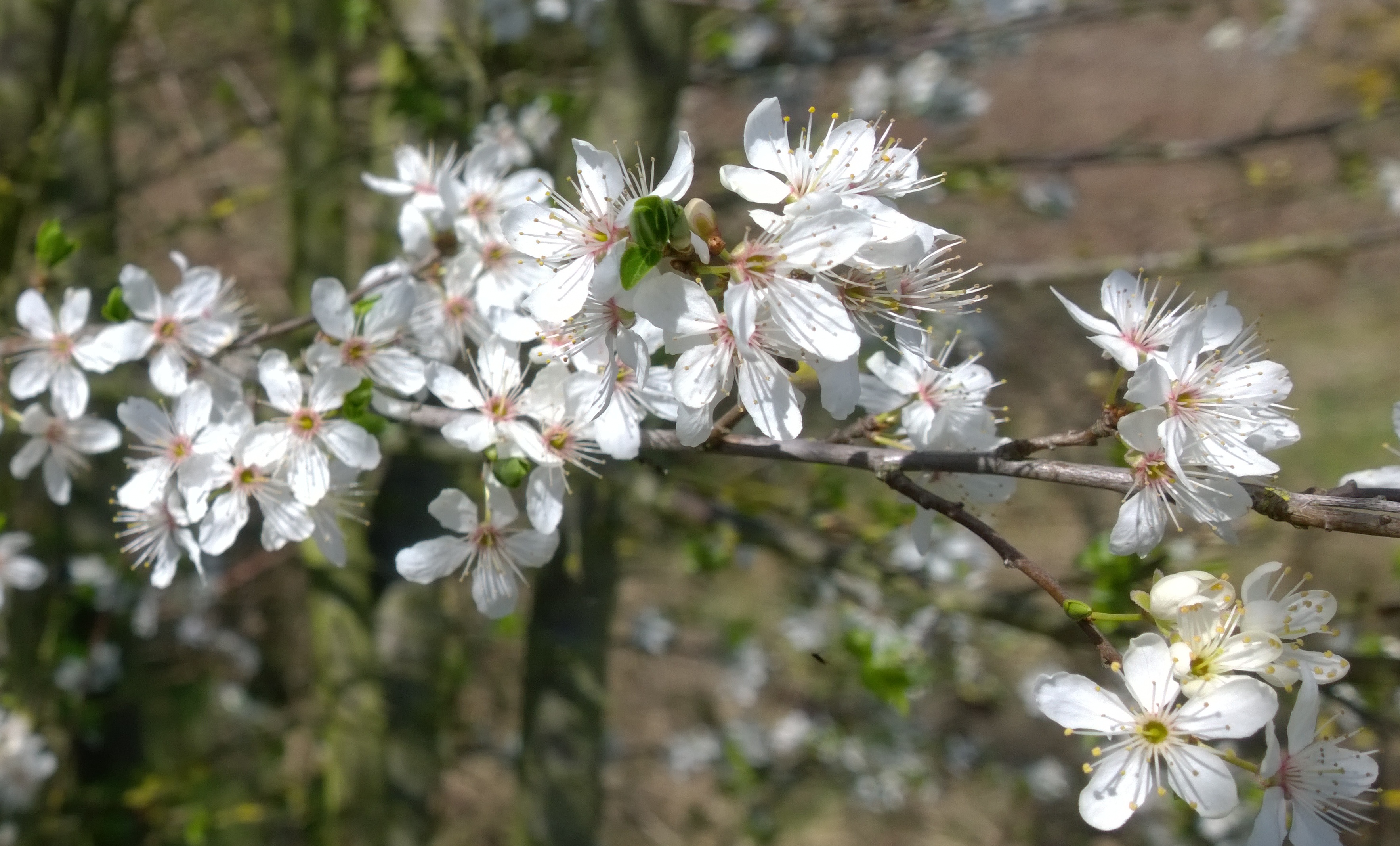
Cherry Plum (Prunus cerasifera) (image ©Mike Poulton)

Cherry Plum (Prunus cerasifera) (image ©Mike Poulton)

There was a great deal of bird activity on the hillside; Magpies, Robins, Blackbirds, Carrion Crows and House Sparrows I see regularly, and today I also noted Chaffinches and caught a fleeting glimpse of a Lesser Whitethroat, or was it a Whitethroat? Unfortunately the encounter was somewhat brief as it flew off in pursuit of one of two Long-tailed Tits that departed from the same Hawthorn bush. I also heard and then had a good sighting of a Chiffchaff calling from the top of one of the Cherry Plums that grow here. This shrub is very obvious on the hillside now with its leafless twigs smothered in 5-petalled, white flowers that open just before the leaves unfurl. Further into the site I spotted two Foxes blissfully unaware of my presence sleeping side by side in the warm sunshine half way down a secluded steep bank.


Peacock butterfly (Inachis io) (image ©Mike Poulton)

Peacock butterfly (Inachis io) (image ©Mike Poulton)

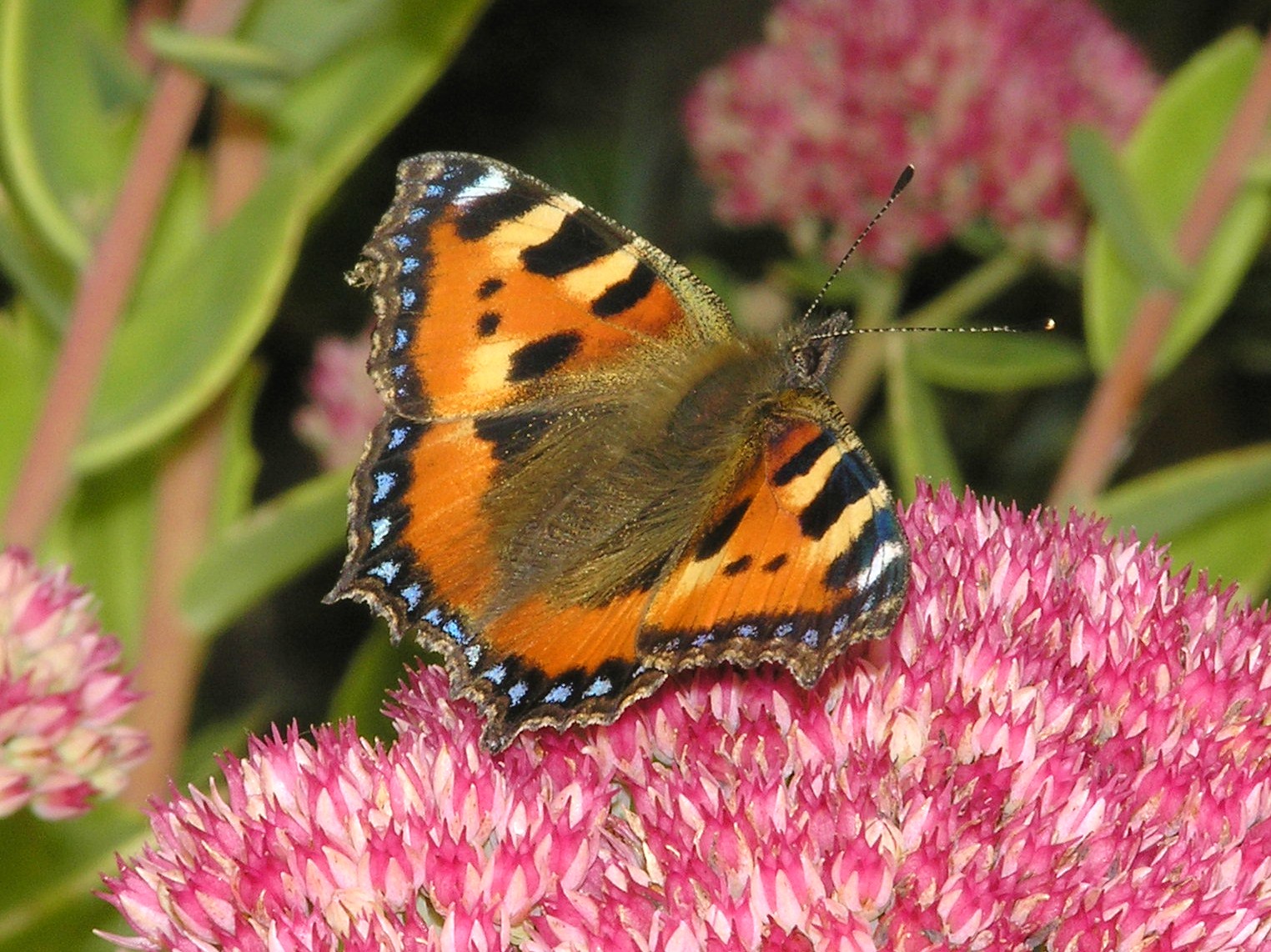
Small Tortoiseshell butterfly (Aglais urticae) (image ©Mike Poulton)

Small Tortoiseshell butterfly (Aglais urticae) (image ©Mike Poulton)

There was a great deal of butterfly activity from Peacocks and Small Tortoiseshells. These two showy butterflies have only just emerged from hibernation having overwintered in sheds, garages and old buildings. The male Peacocks were having aerial tussles with each other, darting off in an instant at the sight of a passing female of the species. The eggs of both are deposited on newly emerging stinging nettle leaves with a preference shown for plants growing in sunny places. The resulting caterpillars build a communal web in young leaves near the top of the plants and remain quite conspicuous, feeding both by day and night. Feeding continues until around mid-summer when the caterpillars pupate to produce the next generation of butterflies that will be seen on the hillside later in the summer.

Apart from Cherry Plum and the golden bloom of Gorse which covers the bank near the Wildlife Trust land, there are very few plants in flower on the hillside so far this year. I saw the occasional Pussy Willow, Colt’s-foot, Dandelion and Lesser Celandine in flower but the main display of flowers is still more than a month away.

Mike Poulton